
The sport of trail ultramarathon running has really gained popularity over the past few years, for good reason! Doing physically challenging things in nature with friends is not only a fun weekend activity, but built into our DNA as humans. The popularity of the 100-mile distance in particular has exploded from just over 4,000 North American finishers in 2010 to 13,000 in 2025.
Now, runners have more access to training/nutrition/inspirational resources than ever, and that’s a great thing! The YouTube documentaries with the jaw-dropping scenery, chronicling the ups and downs of the human experience over a 100-mile race, make the distance seem achievable if not a little intimidating. If your algorithm shifts over into “trail ultrarunner” territory, you’ll quickly learn that the people running these distances are normal athletes like you, not superhuman (for the most part).
Many of the athletes running 100-milers have years of ultra-style training under their (high-carb gel-filled, electrolyte-laden) belts.
Is it possible to jump from running sub-ultra distances straight into training for a 100-miler?
Short answer: Absolutely! Caveat: To do it safely, there are some things you should know and prepare for.
How A 100-Miler Differs From Shorter Races
Every 100-mile race is unique and presents its own unique challenges, from terrain to climate to altitude. However, every hundred miler has a few things in common:
- Lots of time on feet. Expect the race to take 18-30+ hours. You want your body to be conditioned to withstand that much repeated force on your legs and feet for a whole 24 hours or more.
- Nutrition matters a lot. You can get away with racing a marathon without taking in much fuel, but not a hundred miler. You’ll want to understand what foods work well for you while running and racing, and have the ability to take in nutrition during activity.
- Nighttime running. You will be running all night in most cases. Familiarize yourself with your lighting system and practice running at night.
- More gear. You’ll need a system to carry fuel, hydration, and gear like extra clothes, lights, foot care, and poles.
- Logistics. Creating a race plan for a hundred miler, especially with crew, involves lots of logistical planning depending on the race. When can you pick up a pacer? How long will they pace you? What do you need from your crew at different aid stations? If running unsupported, how do you plan your drop bags or aid station needs?
- Mental demands. 24+ hours of sustained physical activity is a lot of opportunity for highs and lows in the mental game. It is difficult to prepare for how you may feel at mile 90 when you’ve never run more than 30 before.
- Physical demands of running 100 miles. Obviously.
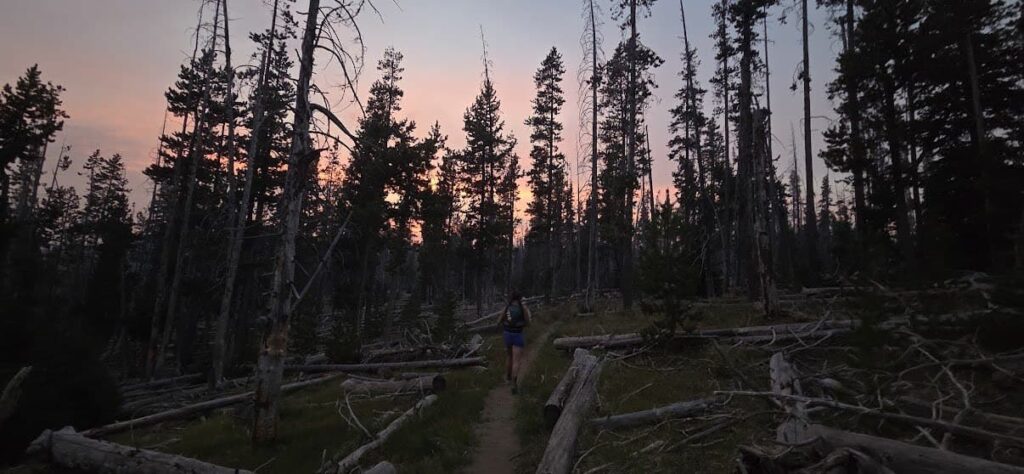
Is It Possible To Run a 100-Miler As Your First Ultramarathon?
It is absolutely possible to run a 100-miler as your first ultra-distance race. However, you should have exceeded the marathon distance (technically “run an ultramarathon”) in your training for the 100-mile race. Most 100-miler training plans call for multiple runs over 26.2 miles.
Pro’s of Running A Shorter Ultra First
There is a lot of value in running some shorter-distance ultras, even a 50K, before the 100-miler. You’ll get the experience of visiting aid stations and the dynamic of sharing the trail with other runners, passing and getting passed. It’s also a great opportunity to test out your fueling strategy.
How To Improve Your Odds For Success At the 100-Miler
The best way to improve your odds for success if you’re running a 100-miler for your first ultramarathon is to give yourself a loooong runway of training.
Strong Running Background
The more substantial your running background, the better. Stronger aerobic base = stronger foundation to train off of. With a strong running background, you will lower the risk of injury when starting up training for a long ultramarathon.
Endurance Training Background
A history of running is important because your body needs time to adapt to the stress that running puts on the joints, muscles and tendons, as well as the GI system. Second-best would be a background in endurance training. If you have developed an aerobic base through cycling or swimming, awesome. You’ll just need to adapt to the demands that running puts on the body that these gentler activities do not.
Thru-Hiking Background
If you have spent a lot of time backpacking leading up to starting training for a 100-miler, you have already done a lot of the aerobic base building and training for lots of time on feet. Thru-hiking is an excellent way to prepare for an ultra. Once you begin more specified training, you will add in speed work and threshold work. But the aerobic base and time on feet, as well as spending time moving over varied terrain in lots of different conditions, is there.
Who Should Probably Not Run A 100-Miler For a First Ultramarathon
While it’s completely doable to run a hundred miler for a first ultramarathon, you want to be a durable runner that can race safely. Athletes who are recovering from injury, do not have enough time to sufficiently train, or have a poor aerobic background should spend more time building up the fitness and health to run 100 miles before signing up for a race.
Training and Fitness Demands for a 100-Miler
The most important question to ask yourself before signing up for a 100-mile ultra is:
Do I have the time to commit to training for this race?
The most challenging part of training for a 100-miler can often be finding the time to train. Depending on your fitness level, peak training weeks will demand 70-100 miles per week of running, plus strength training. Time on feet and back-to-back long runs are also included in training. Do you have the time for a 3 to 5 hour long run each week, sometimes even twice a week?
If you have the time to train, including weekly training runs of 20-30 miles during peak training, you can prepare for a 100-miler. Of course, this is heavily dependent on your running background. If you’re starting from zero, it’s smart to spend months to a year+ building a running base to avoid injury before jumping into ultra training. Plan your “runway” accordingly: Less running experience means you’ll need a longer runway of base training.
Extra (But Important) Factors To Focus On During Training
Running shorter ultras before attempting a 100-miler gives you the opportunity to work out any knots in your ultrarunning system, especially when it comes to gear and nutrition. If the 100-mile race is your first ultramarathon, try to focus on the following during your long training runs.
Pro tip: Create a long training run with a couple of “aid stations” along the way. This could be as simple as creating a looped route where your vehicle is an “aid station”. This allows you to practice your system for swapping out hydration bottles, fuel/trash, and changing shoes and socks.
Nutrition and Hydration
- How many grams of carbohydrate are you consuming per hour? Keep track.
- What foods work well with your GI system?
- How many hydration flasks fit in your vest? Are they accessible? Do you prefer a hydration bladder or flasks? Belt or vest? Are the caps easy to get on and off at aid stations or is it a giant pain in the butt to thread lids back onto flasks?
- How many electrolytes do you need per run?
- Can you rely on aid station nutrition, or do you need to bring your own?
Gear
- Do you have a foot care system that will help prevent blisters and other foot issues?
- Do your shoes work for you?
- What will the weather and climate be like at the race? What are the best clothes for the weather? Will you need a rain jacket? Warm clothes?
- What socks do you like? Do you have a couple pairs to change into during the race?
- Do you have a lighting system to get you through the night portion? What is the power source for your lights? Do you have extra batteries? Do you have backup lights?
- Are you wearing a vest? Does it have enough capacity?
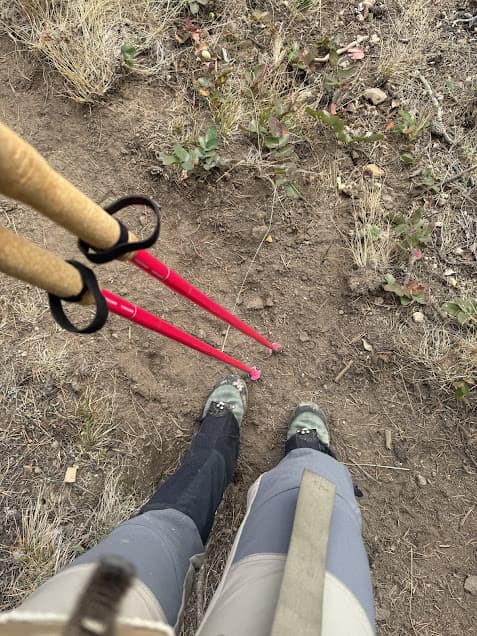
- Are you going to use poles? Have you practiced with them?
- Are you going to use any accessories like gaiters, arm sleeves, sunglasses, an ice bandana?
- Do you have anti-chafe and basic first aid supplies? A good way to carry them?
- Does your watch’s battery last for a whole 100 miles? If not, do you have a way to charge it?
Click here to learn how to prioritize gear to fit your trail running/ultra gear budget.
Race-Specific Training
- How much vertical gain does your race have? You will want your long runs to have about the same amount of vert per mile as the race. (Example: 10,000 feet of vertical gain in 100 miles = 100 feet of gain per mile. Try to plan a 25-mile long run with 2500 feet of gain).
- Do you need to do hill-specific workouts, on the treadmill or real hills?
- Practice running at night!
- Make sure to practice running downhills as well as uphills. This helps prevent injury and strengthen your legs.
- Add strength work to your training. Strong legs are important for varied terrain.
Choose A Race To Set Yourself Up For Success
Picking the right first ultramarathon can make or break your race day experience. You will want to choose one according to your training and ability. Keep in mind some of these factors when choosing an ultra:
- Distance from home. You and your crew will have to travel to the race; how will you get there? Is it close enough to drive or will you have to fly?
- Elevation of the race. How does your body handle higher elevations? Keep this in mind if considering a mountain ultramarathon.
- Vertical gain of the race.
- Climate and weather of the race location.
- How much support and aid is offered at the race.
- Medical support and safety at the race.
- Cutoff time for the race. Can you realistically complete the run under the cutoff?
- Is it a race you’re excited about?! Training is so much more fun when you’re actually looking forward to the race day experience.
Running a 100-mile ultramarathon comes down to training and preparation. If you have the time and ability to dedicate to proper training, race day could be an amazing experience. Be honest with yourself when considering your training schedule and current fitness level, and plan accordingly. Be smart, be consistent and get that buckle!

Pingback: The Escarpment Trail in Michigan's Porcupine Mountains Wilderness - the lupine
Pingback: Save Money on Trail Running Gear: Splurge vs. Save - the lupine
Pingback: 10 Trail Running Podcasts for Your Next Long Run - the lupine
Pingback: Hiking the Little Carp River Trail in the Porcupine Mountains - the lupine
Pingback: Waterfalls On the Big Carp River Trail, Porcupine Mountains - the lupine
Pingback: Hiking Along a Rugged River on Minnesota's Carlton Trail - the lupine
Pingback: 100-Mile Trail Ultramarathon Gear List - the lupine