
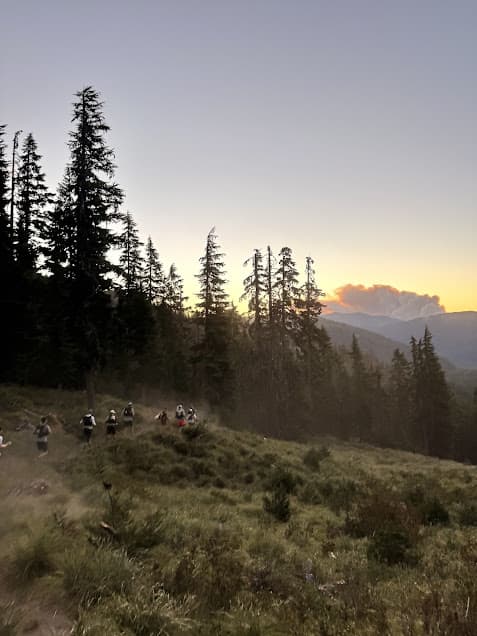
One of the best parts of trail running is the opportunity to travel and experience new places and trails you might otherwise have never seen. That being said, each ultra is going to be slightly (or a lot) different from the next when it comes to climate and conditions. Definitely check your race’s website for required gear and abide by those rules. Keep an eye on the forecast closely the week leading up to the race. You don’t want to be underprepared, but you also don’t want to be lugging around a bunch of heavy clothing or gear that is unnecessary for the current conditions.
This list is the gear I have used for summertime, mountain ultramarathons ranging from 33 degrees at night to 100 degrees during the day. It’s just a baseline starting point with what worked for me; tweak it to your own needs and the conditions of your own race.
Note: Some of this gear is kept in a drop bag or with crew during the daytime portion of the race, and retrieved as we transition into nighttime. This includes hiking poles, mittens, beanie and long sleeves/jackets.
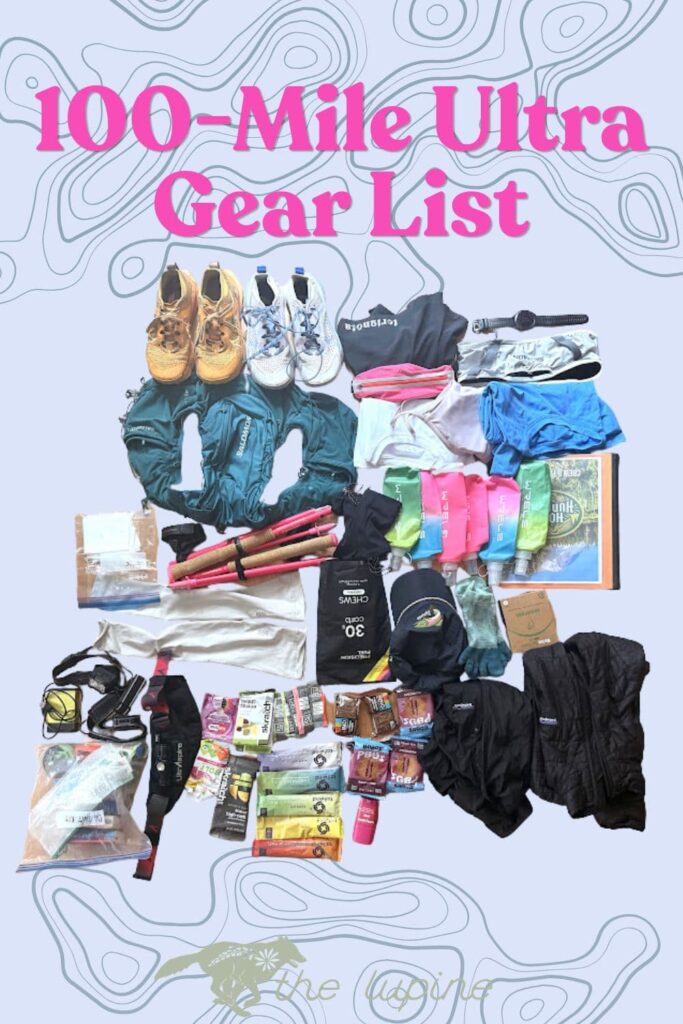
100-Mile Ultramarathon Gear List
Clothes
- Running vest (Salomon ADV Skin 12)
- Running belt (Salomon Pulse)
- T-shirt (2)
- Shorts (2-3) (Alo, Janji, Terignota)
- Arm sleeves (REI Active Pursuits sun sleeves)
- Toe socks x2 (Creepers and Injinji)
- Running shoes x2 (Nike Zegama)
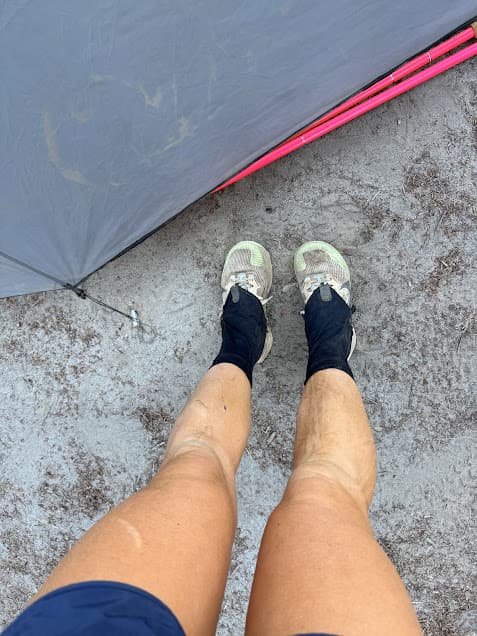
- Gaiters for shoes (REI store brand, Dirty Girl, or Altra)
- Rain/wind shell – Patagonia Houdini (for wind or very light rain)
- Visor or ballcap
- Mittens or gloves
- Beanie for cooler sections
- Buff for sun or cold
- Long sleeve or sun hoodie
- Poncho or rain jacket
- Leggings or running pants
- Puffy or warmer option for night (Patagonia Nanopuff)
- Sunglasses (good for dust kicked up by other runners)
Gear
- Running vest (Salomon ADV Skin 12)
- Running belt (Salomon Pulse)
- Lightweight, collapsible hiking poles (Komperdell Carbon FXP)
- Method for carrying hiking poles (quiver or looped belt)
- Waist lamp (Ultraspire)
- Extra rechargeable battery for waist lamp
- Headlamp x2
- Extra batteries for both (Li rechargeable, AAA)
- Garmin or other watch
- Change the settings on your watch to extend the battery life if necessary
- Garmin charger
- Phone charger
- External battery for on-the-go charging
- Cup for aid stations
- Soft flasks (Get some that are easy to refill at aid stations)
- Earbuds for music
- Downloaded maps
First Aid
Customize this to your own needs. These are the staples I like to keep on hand in the med kit.
- Anti-chafe
- Squirrel’s Nut Butter
- BodyGlide anti-chafe stick
- Salty Britches
- Tylenol
- Stomach meds (Tums, etc.)
- Blister care
- Band-Aids
- Needles
- Toothbrush and toothpaste
- Sunscreen
- Tiger Balm
- Wipes
- KT tape
- Theragun or massage roller
Non-Aid Station Nutrition Suggestions
It’s always smart to bring foods that you used in your training. Have foods on hand that will not upset your stomach and are reliable sources of carbs. Below are some of my tried-and-true favorites for sports nutrition.
- Electrolytes- Saltstick Fast Chews
- Liquid nutrition- Tailwind
- Carbohydrate chews- Precision Nutrition 30g, Skratch
- “Real Food” – Bobo’s Bars, Poptarts, Kind breakfast bars
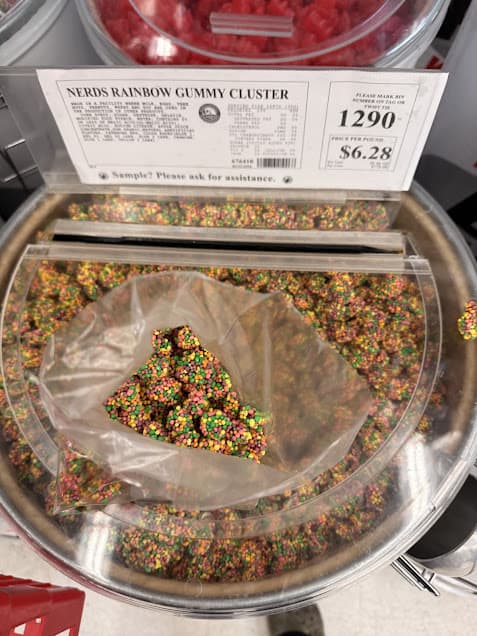
- Candy- Nerd’s clusters, Peach Rings, SourPatch Kids, Gushers
Crew Gear
- Cooler for cold drinks and snacks
- Chairs!!!
- Blankets or sleeping bags for night sections
- Headlamps
- Phone chargers
- Maps
- Binder of all pertinent race information (check the race website for a crew guide)
- Print out pages with details and maps about each individual section
- Make a plan for which aid stations are crew-accessible
- Gifts for crew! They’re doing so much for you.
Post-Race
- Comfy shoes that allow for swollen feet
- Sweatpants
- Hoodie
For more trail running insights, check out:
Can You Run A 100-Miler for Your First Ultra?
Splurge vs. Save: Trail Running Gear

Pingback: Save Money on Trail Running Gear: Splurge vs. Save - the lupine
Pingback: Can You Run a 100-Mile Ultramarathon as Your First Ultra? - the lupine