
Check out the Snake Road Species Checklist here!
Forest Road 354 in Illinois’s Shawnee National Forest might not ring any bells at first glance, but it goes by a better-known name: “Snake Road”. If that gives you the creeps, you can stop reading now. You’ll hate it there.
But if you were the kid who was always flipping over rocks, Snake Road is absolutely a place that deserves a spot on the bucket list.
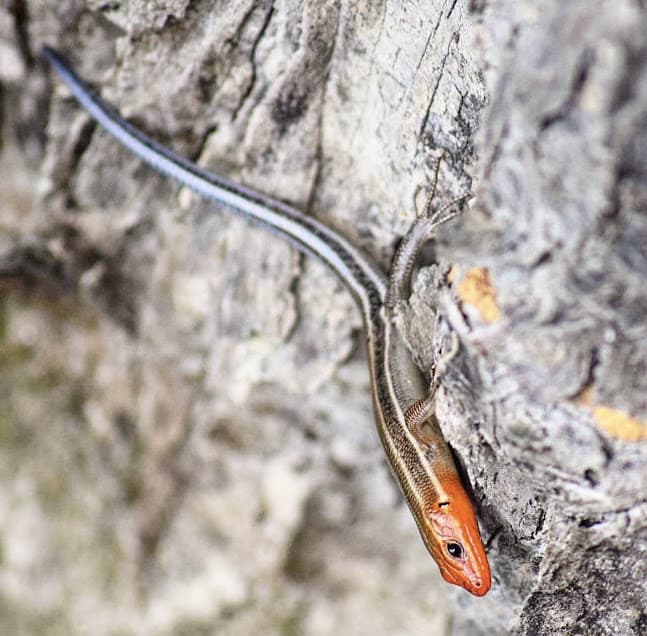
LaRue-Pine Hills/Otter Pond Research Natural Area
In the southwestern corner of Illinois, just four miles from the Mississippi River, Snake Road lies within the LaRue-Pine Hills/Otter Pond Research Natural Area. Limestone bluffs bulwark 150 feet above the gravel road that splits the bluffs to the east from the swampy, low-lying Big Muddy bottomlands to the west.
The LaRue-Pine Hills RNA is the United States’s 250th Research Natural Area, designated as such in 1991. The RNA designation protects the remarkable biodiversity of the area. There are 14 different natural communities found in this spot, from prairie to forest to wetland. The “Pine Hills” part of the name refers to the shortleaf pine that can be found here, only one of two spots in Illinois. Even Merriwether Lewis was impressed by the bluffs above the Mississippi and wrote about them in his 1803 journal!
Within LaRue-Pine Hills, around 1,350 species of plants and wildlife have been noted. This includes more than half of Illinois’s reptile and amphibian species! Even rare-to-Illinois species such as the armadillo can be found here.
Snake Road in Shawnee National Forest
The gravel road FS 354 within Shawnee National Forest runs north-south along the base of the 408-million-year-old limestone bluffs. Due to the presence of so much wildlife along the road in the spring and fall, since 1972 the Forest Service has closed the road to vehicle traffic during those sensitive times of the year.
Every year, Snake Road is closed from March 15-May 15 and September 1-October 30. Occasionally, such as in 2025, these dates are subject to change due to weather patterns that affect reptile behavior.
While you can’t drive on Snake Road, it is open to foot traffic only. No horses, bikes or motorized vehicles are allowed.
Snake Road has become a famous destination for people interested in wildlife, especially reptiles and amphibians, to visit. With such a diverse array of species inhabiting the area, this 2.5-mile section of gravel road has really made a name for itself.
Parking at LaRue-Pine Hills Snake Road
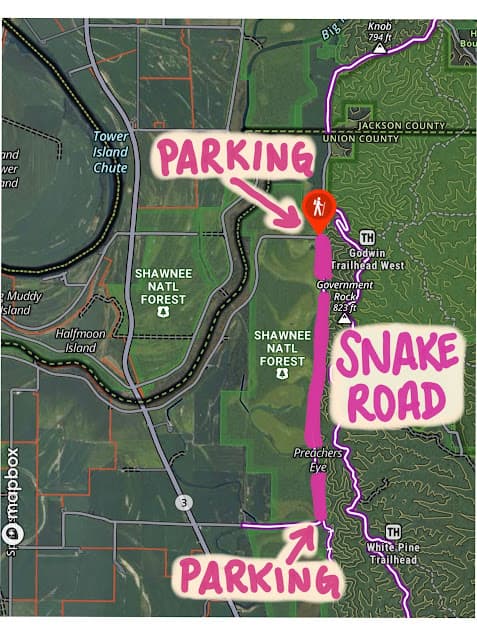
There are two parking areas at Snake Road, north and south. The Winters Pond parking lot on the north end of the road (37.58499, -89.44012) has space for about a dozen vehicles to park. The north end is the more popular spot to park and is located off South Muddy Levee Road.
The south gate is located at (37.54566, -89.43947) and has space for about 3 cars. The south end of Snake Road starts where LaRue road crosses the railroad tracks.
Why are there so many snakes on Forest Road 345?
Since reptiles and amphibians are cold-blooded, they must overwinter in a hibernaculum sheltered from winter temperatures. For the snakes of LaRue-Pine Hills, the limestone cliffs provide the shelter needed to survive the winter.
In the fall, snakes move from the swampy lowlands along the Mississippi River up to their hibernaculum on the east side of Snake Road. When ground temperatures reach the necessary warmth, the snakes move from the bluff area back across Snake Road to spend the summer down low.
Best times to visit Snake Road
The closure windows in the spring and fall are related to the peak movement times of reptiles between the bluffs and swamps. Within those timeframes, the best days to visit are warm enough for the animals to be active. If you visit on a cold and blustery day in March, not much will be out and about when compared with warm and sunny days.
Warm days after a good rain are great herping days. There is an active Facebook page where people post their experiences at Snake Road, so checking it can be helpful for trip planning.
Most common species at Snake Road
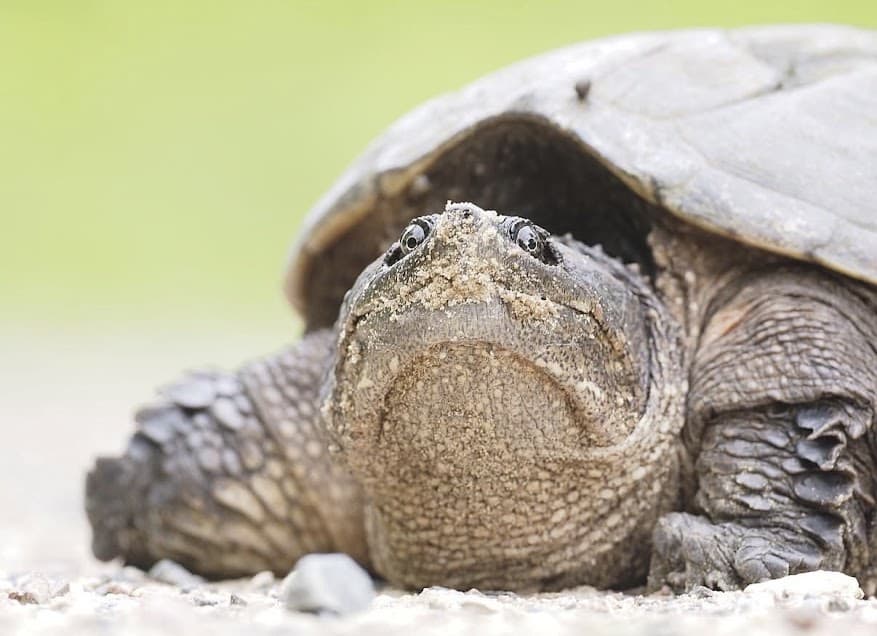
If you’re looking for reptile and amphibian diversity, Snake Road has it. Snakes, lizards, turtles, salamanders, newts, sirens, frogs and toads can all be found at LaRue-Pine Hills RNA.
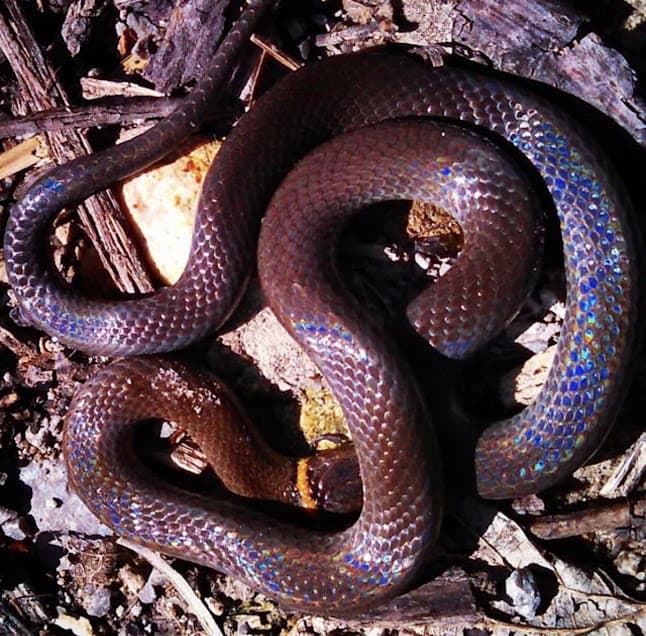
Common nonvenomous snakes at the site include Ringneck snakes, DeKay’s Brown snakes, and Black Rat Snakes.
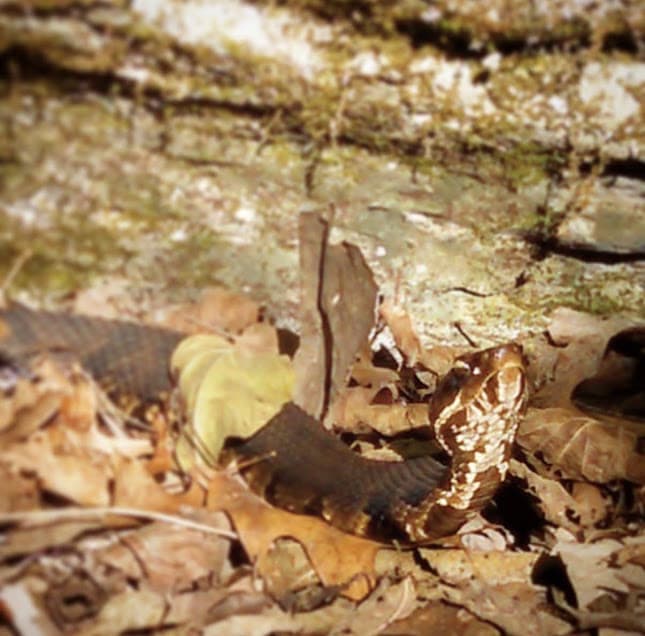
The most commonly sighted snake at Snake Road is the cottonmouth (water moccasin). Shawnee National Forest is at the northern end of its range, as the Mississippi bottomlands in southern Illinois have some remnants of swampy habitat more similar to southern swamps than the northern prairie potholes. The cottonmouth can be up to 159 centimeters long, and adult snakes are uniformly black or dark olive colored. The “cottonmouth” name refers to the light color of the inside of the snake’s mouth when it gapes. Cottonmouths can commonly be seen sunning on logs in the water or on rocks along the road.
The best way to spot snakes along Snake Road is to walk calmly and quietly. Keep an eye out around rocks, logs and vegetation along the road. Each species has its own niche preferences, and sometimes sitting still and watching is the best way to notice these well-camouflaged animals.
In addition to herps, LaRue-Pine Hills is a great area to look for migrating warblers, particularly the cerulean warbler.
For a checklist of reptiles and amphibians found at Snake Road, click here.
How to Treat a Venomous Snakebite
Most cottonmouth snakebites are not the result of an accidental misstep but rather are due to intentional handling of the animal. The best way to prevent a snakebite is to watch your step and refrain from handling snakes.
Relative to rattlesnakes and copperheads (both also found at Snake Road), cottonmouth bites are much less common. Only about half of venomous snakebites result in envenomation (half are “dry bites”). However, it is important to treat every snakebite as though venom was injected.
Typical symptoms to expect after a venomous snakebite include:
- Pain and burning at the bite site
- Swelling of the limb (this will progress–use a marker to mark the edge of the swelling with the time to assist hospital staff later)
- Nausea and vomiting
- Bruising, dizziness, blood-filled blisters, impaired blood clotting
Snakebite First Aid
- In the event of a snakebite, call 911 immediately.
- While waiting for emergency response, keep the victim calm and remove any restrictive clothing items or jewelry.
- Wash the wound gently with soap and water.
- Keep the affected limb immobilized. If you can, have the victim lie down and keep the limb in a neutral position.
- NEVER use a tourniquet on a snakebite-affected limb. This will concentrate the venom.
- Do not apply cold packs to affected tissue.
- NEVER attempt to “suck out” venom from a snakebite.
- Do not give NSAID medication. It can make bleeding worse.
Protecting Wildlife from Disturbance and Trafficking
A large number of people visit Snake Road each year with the intention of watching and photographing wildlife. However, the human presence does put sensitive species of reptiles and amphibians at risk.
Handling and harassing snakes and the other wildlife at LaRue-Pine Hills is not allowed, even when the intention is innocent. This not only helps protect the health of wildlife, but also provides the basis for enforcing anti-wildlife trafficking laws. Any kind of container that could hold a reptile or amphibian (totes, bags, pillowcases, etc) is prohibited at Snake Road. Additionally, snake handling tools (i.e. snake hooks) are not allowed.
The illegal reptile trafficking trade is a multimillion-dollar global industry. US Forest Service law enforcement can be reached at 618-201-3364.
Where To Stay and Eat Near Snake Road
To the south:
- Cape Girardeau, Missouri has hotel options. Cape Girardeau is about 45 minutes south of Snake Road.
To the north:
- Carbondale, Illinois is the largest city in the region. It is 40 minutes from Snake Road and has lots of options for places to stay and eat.
- Quatro’s Deep Pan Pizza is a Carbondale classic
- Branch Cafe & Market has lots of vegan food options
- Harbaugh’s Cafe for breakfast and lunch–try the biscuits & gravy
- Midland Inn – great food and margaritas outside of town
South of Carbondale, there are lots of little cabins and AirBnb’s available to book. Southern Illinois also has great wineries and lots of other hiking in the area! Check out Garden of the Gods, Crab Orchard National Wildlife Refuge, or Giant City State Park for some SoIll highlights.
Pingback: Snake Road (Illinois) Species Checklist - the lupine
Pingback: 10 Podcasts for Well-Rounded Wildlife Biology Students (and pros!) - the lupine
Pingback: See Rare Owls and Boreal Migrants at Minnesota's Sax-Zim Bog - the lupine
Pingback: Hiking the Garden of the Gods in Southern Illinois - the lupine
Pingback: The Best Spots to See Cranes in Wisconsin - the lupine
Pingback: Horicon Marsh Birding: Guide to a Globally Important Wetland - the lupine
Pingback: 5 Thundering U.P. Waterfalls in One Hike: Black River, Michigan - the lupine