
About an hour northwest of Duluth, Minnesota lies one of the premier winter birding destinations in the USA. The Sax-Zim Bog is the name for a 300-square mile piece of diverse habitat encompassing both private and public lands. It provides wintering habitat for migrating boreal bird species that are uncommon elsewhere south of the Canadian border. While it is known for the tamarack and black spruce bogs, hardwood riverbottom forests, grasslands and agricultural habitats add to the diverse ecosystems in this area.
Finding Birds at Sax-Zim Bog
Roads that people use to get to home, work and school crisscross Sax-Zim Bog. But if you’ve ever been to a park like Yellowstone, you know that a bunch of cars pulled over to the side of the road means one thing. Someone saw something cool, and you’d better see what everyone’s looking at. This rule of thumb also applies to Sax-Zim bog. Keep in mind that the people who live in the area use the roads too. They may not love having spotting scopes pointed in their windows by Jerry from Florida who spotted his lifer pine siskin on their front yard bird feeder.
With that in mind, taking a cue from other visitors can be a fantastic way to see birds!
Welcome Center on Owl Avenue
Stopping by the Welcome Center (8793 Owl Ave, Tiviola, MN) run by the Friends of Sax-Zim Bog is the best way to get the most current information on where people are seeing wildlife at the bog. The welcome center is open daily 10-3 from December to mid-March and again from June 1 to September 30. The welcome center features a boardwalk, feeders, feeder viewing area, nature library, taxidermy exhibit and small gift shop. Knowledgeable and kind staff can point you in the right direction for your best chance at seeing recently reported species.
In addition to the in-person ways to find birds, a few Facebook groups are dedicated to Sax-Zim bog. There is also a Telegram group chat in which visitors post locations of the birds they are currently seeing. The popular birding checklist site eBird is a good one to check for most species. However, eBird does not report the locations of more sensitive species like the Northern Hawk Owl. You’ll have to rely on Telegram, the visitor center or your own eyes and ears for that one.
How to See Owls at Sax-Zim Bog
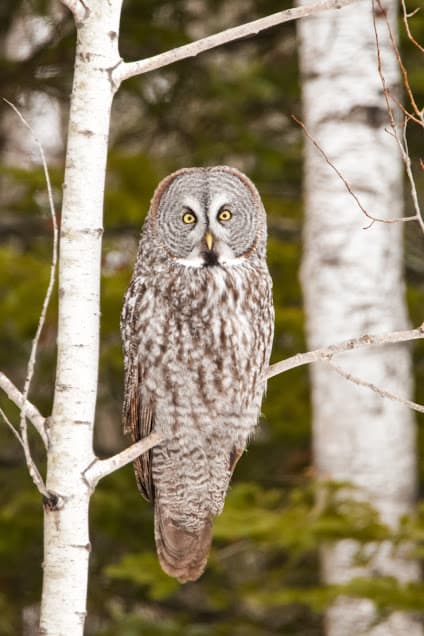
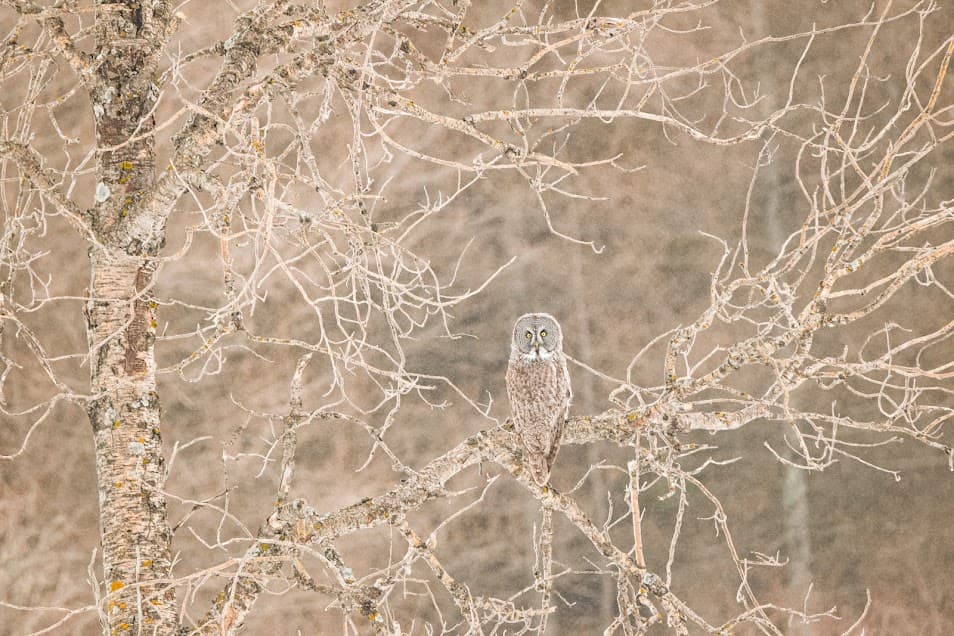
For many birders planning a winter trip to Sax-Zim bog, owls are at the top of their wish list. Sax-Zim bog is particularly well-known for great gray owls, which breed there in the summer. Northern hawk owls, long-eared owls, boreal owls, barred owls, great-horned owls, Northern saw-whet owls, snowy owls, and short-eared owls inhabit the variety of habitats here, as well.
Great Gray and Northern Hawk Owls
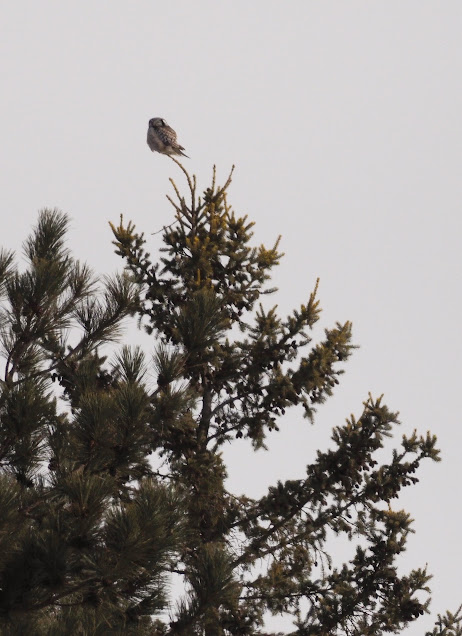
Getting eyes on each of these owls depends on which species we’re talking about. Great gray owls and Northern hawk owls are both diurnal hunters. They commonly perch within visual distance from roads to hunt rodents under the snow. You can see Short-eared owls during the daylight hours, skimming low over meadows and grasslands while turning their heads to stare directly at you with goldenrod-colored eyes while flying.
Snowy Owls
Seeing snowy owls at Sax-Zim bog depends on the year, similar to other far northern irruptive species. An abundance of food in the snowy owl’s northern breeding territory can lead to a highly successful chick-rearing season, correlating with higher numbers of snowy owls ending up further south than usual. People often report snowy owls in areas near the bog, such as the airport in Superior, Wisconsin and surrounding agricultural areas.
Spending time listening for owls at night allows you to locate species that are more nocturnal. Please be aware of the ethics of calling to owls; calling in small owls and the larger species that may prey on them can have a real impact.
Woodpeckers and Winter Finches
In addition to owls, woodpeckers and winter finches provide a main attraction for winter birding at Sax-Zim Bog. A larger-than-life Pileated woodpecker forages just feet from your face at the Welcome Center birdfeeders, showing off its crimson crest. Downy and hairy woodpeckers flit among the trees and peer at you from behind Ramen noodle-looking lichens. American three-toed and black-backed woodpeckers are some of the more sought-after species; 2026 was a particularly good year for spotting black-backed woodpeckers.
The Friends of Sax-Zim Bog as well as private citizens maintain boardwalks and bird feeders throughout the area. Spending time sitting at the feeders can yield sightings of pine grosbeak, evening grosbeak, pine siskin, redpoll, red crossbill, white-winged crossbill, and purple finch. The female pine grosbeak is particularly striking with her large body size, ochre rump and head and gray body.
Chickadees and Canada Jays
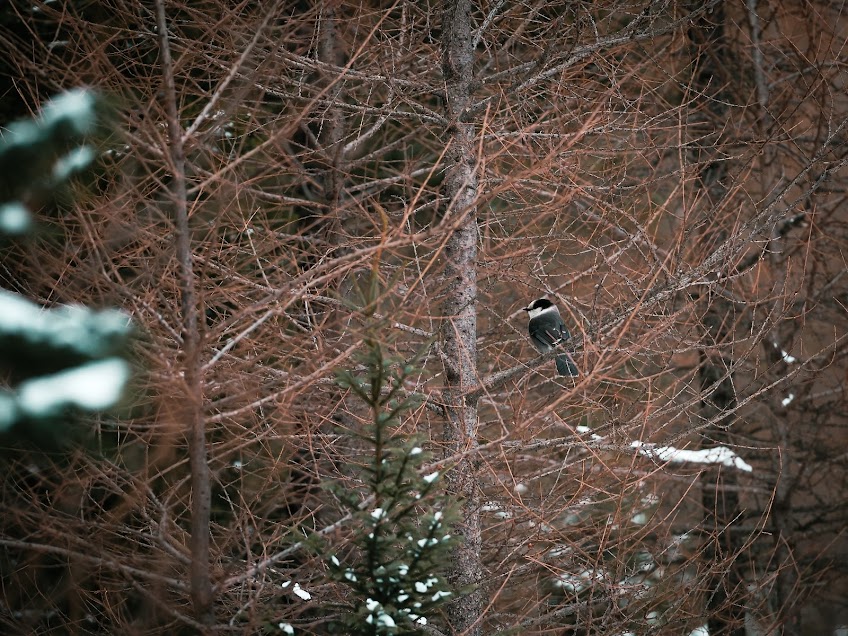
The other common visitors to the feeders maintained around the bog are chickadees, nuthatches and gray jays. The official bird of Sax-Zim bog should probably be the black-capped chickadee; these gregarious masked puffballs are everywhere. Boreal chickadees are less common, but you know one when you see one with its brown tones on its head and sides. Give the feeders some time, and the chance of a boreal chickadee making its appearance goes up.
Kestrel-sized Canada jays visit the feeders, as do white-breasted and red-breasted nuthatches. Keep an eye out for peanut butter smeared on branches and trees near the feeders. Deer ribcages hung in trees also provide foraging habitat for many of these species.
How to See Mammals at Sax-Zim Bog
If you leave without being verbally berated by a 7-ounce Tamiasciurus hudsonicus, did you really do Sax-Zim Bog right? Staring you down out of white-ringed eyes, the red squirrel loudly demands that you get away from its post overlooking the nearest bird feeder right now. They sure are cute, though.
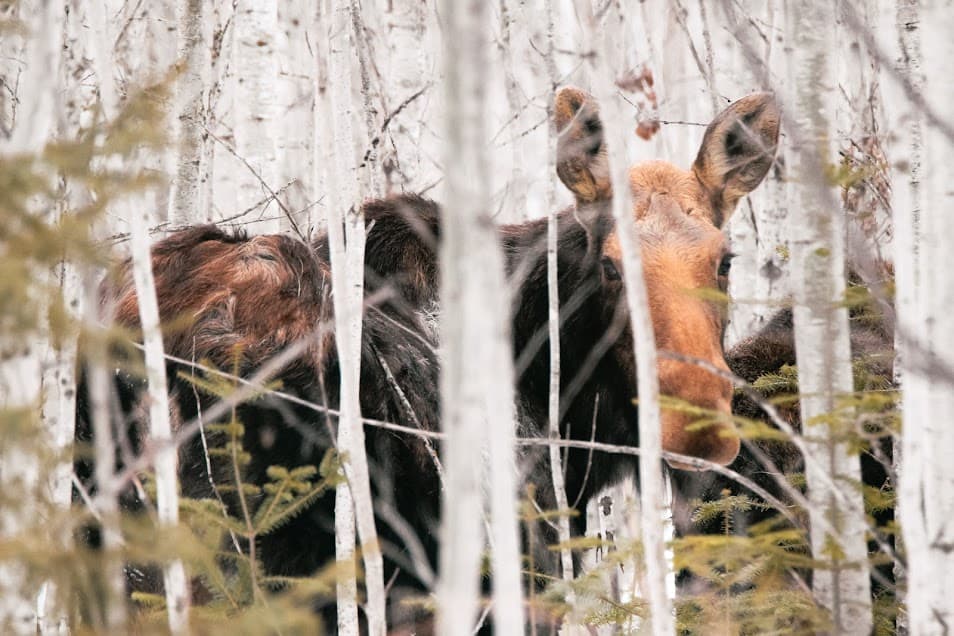
Moose, snowshoe hare, white-tailed deer, coyote, red fox, and skunk are some of the species I was lucky enough to see in just a couple days at the bog. The mammalian highlight of the trip was the shy white ermine that approached the feeder briefly and then disappeared back among the logs in the snow.
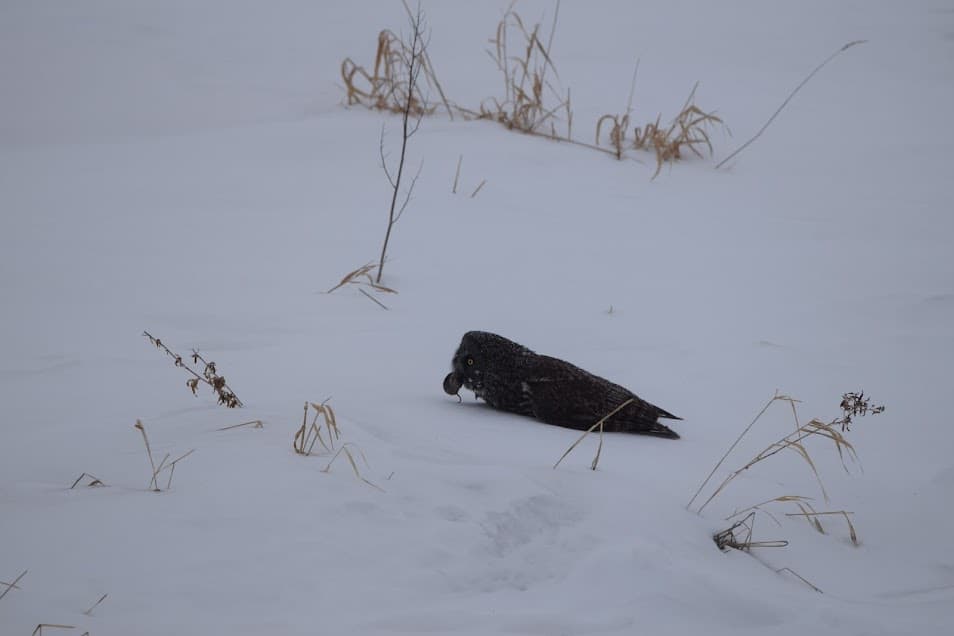
Wolves are sometimes seen in the Sax-Zim bog area. Keep an eye out for tracks in fresh snow crossing or traveling along roads. Pine marten are sometimes reported at certain feeders. This would be a good species to ask about at the Welcome Center. For most mammals, dawn and dusk are the best times of day to catch activity. Unless the mammal is an unfortunate Microtus vole plucked out of the snow by the bill of a Great Gray owl… that could be any time of day.
Where to Stay and Eat Near Sax-Zim Bog
The extremely informative Friends of Sax-Zim Bog website has the most up-to-date information on places to stay near Sax-Zim Bog. Many of the hotels listed on their website even offer discounts to birders!
Food Recommendations:
- In Duluth, the lavender latte at Yellow Bike Coffee was the perfect fuel for a day of rapidly rotating between maps, bird books, binoculars, and camera viewfinders.
- The FOG (fig-onion-gouda… on a pretzel bun) Minnesota wild rice burger with an Apricot Wheat beer at Fitger’s Brewhouse in Duluth
- BoomTown Woodfire Bar and Grill had some awesome meatless Lenten specials for Friday night dinner out near Duluth. Crab cake sliders and the shrimp scampi flatbread were great.
- The Social House for Sunday morning breakfast has a substantial menu, delicious pancakes, eggs Benedict, and country fried steak
- If you’d rather spend the evening with a craft cocktai, the Rathskeller speakeasy is a cool place in Duluth