
Picking an area and planning a backpacking route is one of my favorite activities. It’s a great exercise in creativity with a healthy dose of common sense. It can be a little daunting if this is your first time, but will quickly become an addiction, promise. This is simply a guide with questions to ask yourself when it comes to planning your own backpacking trip. Get creative and then get outside!
Brainstorm and consult the Internet for broad-scale ideas.
Starting from complete scratch? How exciting! Some online searches for “Hiking and backpacking in ________” (Colorado, Rocky Mountains, San Juan National Forest, etc…) can help you become acquainted with some options that look appealing. AllTrails, backpacking websites, travel websites and Reddit are all good starting points.
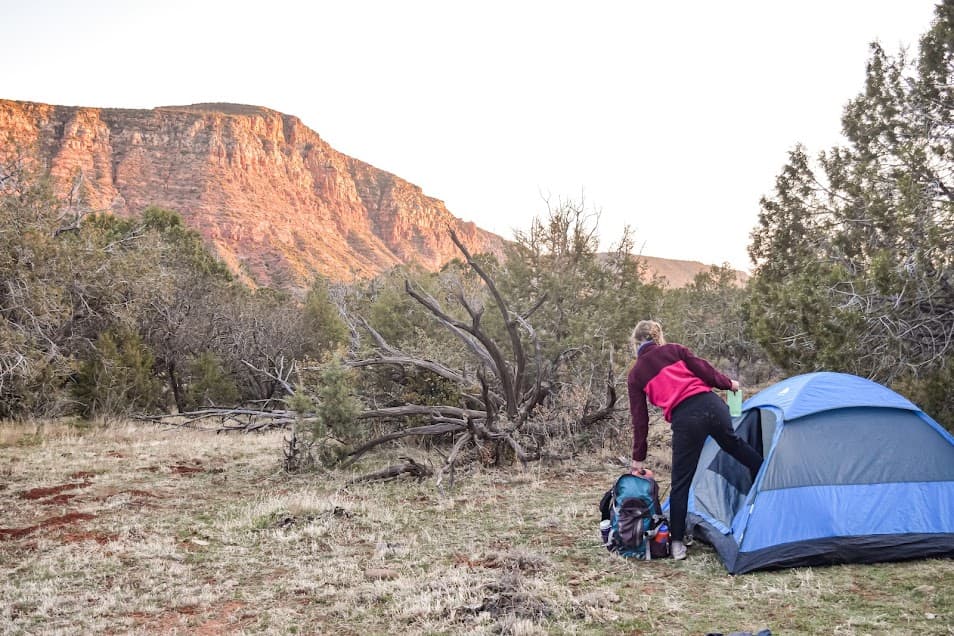
Think: What am I looking for in a backpacking trip?
Some questions to ask yourself!
- Can I drive there, or am I willing to fly with all my gear and get a rental car to go to the trailhead?
- What does my schedule look like–how many nights can I spend camping?
- Am I looking for something local for a three-day weekend, or do I have a 10-day window to plan a trip?
- How much backpacking can I physically handle?
- What type of terrain do I feel comfortable hiking in?
- Am I going to be ok sleeping at a higher elevation coming from a much lower one?
- Am I going to be planning a solo backpacking trip, or hiking with partners? If so, what are their physical abilities?
- How many miles per day/vertical gain is reasonable for me?
- What kind of scenery do I want to experience?
- What time of year am I going, and which locations work with that season?
- Do I have the appropriate gear for this type of backpacking trip? If not, can I budget enough to acquire it? Can I borrow gear from friends?
- Do I have the resources for this hike to end in a different spot from where I started? Can I do a shuttle with friends? Am I comfortable hitchhiking? Do I need to make sure my route starts and ends in the same spot?
Start with a paper map.
You’re going to want to have a paper map on you during the trip itself, so you might as well get it in hand now. I am a huge fan of the National Geographic maps; they’re good quality and have trail miles and names on them. There’s something about spreading the map on the floor and getting a realistic idea of how all the trails fit together and where they go.
If you already have an exact route in mind, great! But if you have a couple extra nights built into your schedule, planning a route with a paper map is a great way to come up with a big trip. If there aren’t enough trail miles to accommodate your lengthy trip window, consider if there is a spot you might like to camp at for multiple nights and enjoy. This could be fishing or swimming in a certain lake, or setting out on secondary trails for day hikes and leaving camp in the same spot for a few nights.
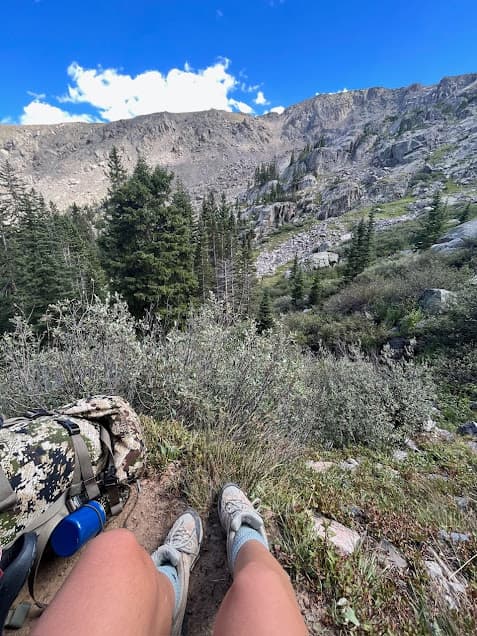
Consult the Internet for fine-scale details after your paper map.
Whole lot of flip-flopping between the digital and analog here, but we need both!
Checking online can get you the most current information, such as trail closures, wildfire, other restrictions that may impact the planned route. Trust me, you don’t want to hype up this trip for yourself and drive 12 hours away just to find out about trail closures and natural disasters that were all over the Internet. If that does happen to you, it’s ok too!!! We can always come up with a backup plan.
Figure out a plan for a vehicle shuttle if necessary.
Out-and-back or looped routes take some of the headache out of planning a backpacking trip, but starting and ending in the same spot is not always ideal. Especially in situations like a mountain range traverse or a section hike, having the option to end somewhere different is awesome.
Shuttles can be done three ways:
- Hiker leaves car at end point. Friend drops hiker off at start point. Hiker hikes from start point to car.
- Hiker parks car at start point. Hiker hikes from start point to end point. Friend picks up hiker at end point and brings them back to car.
- Friend drops hiker off at start point. Friend picks up hiker at end point.
Or, the forbidden fourth way: the hitchhiking shuttle. Can be effective, will be unreliable, might meet your new best friend. Utilize at your own risk.
Do you need to make campsite reservations or get permits for your backpacking trip?
Many national forests, wilderness areas, and BLM lands allow dispersed camping. Most national parks, state parks, and popular places do not allow dispersed camping. Know before you go.
Some locations also require a permit, which may either be something you pick up on the day of, or have to apply for months in advance through a lottery. With the increasing use of protected areas, many more management agencies are requiring permits than even just a few years ago.
Figure out per-day mileage or planned campsite destinations.
This one isn’t a “must”, but it can help! Budget your miles over the days you have available to hike. Longer mileage days to cover some ground, shorter days if you would rather spend some time at camp or enjoying a specific spot along the trail.
For dispersed camping, having exact campsites all planned out ahead of time is not 100% necessary. Having a general idea of where you would like to camp, or even a specific location such as a lake, is good. Unless reservations are involved, you are not guaranteed a campsite; other people may have claimed it already. Stay flexible and it won’t be a big deal.
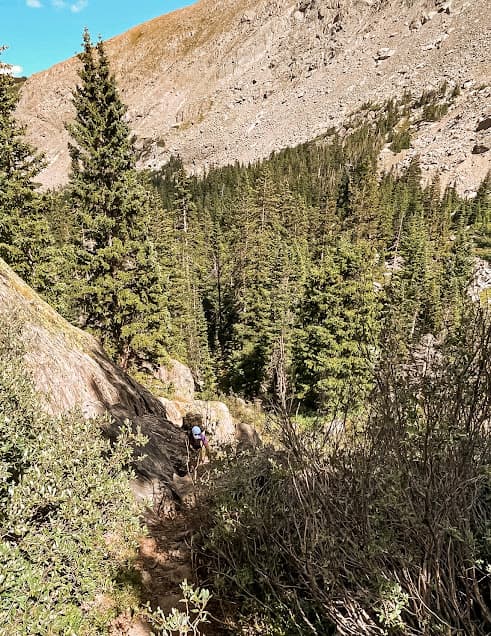
Have a plan for water.
Sure, there are creeks all over the place on the map. Skinny little blue lines criss-cross all over the trail! Two Nalgenes and a filter should be plenty, right? WRONG. About 70% of the time, 70% of those “creeks” on the map will be nothing more than some rocks, some of which will be slick with slime if you’re lucky.
Plan for reliable water sources like bigger lakes, rivers and creeks that are more than seasonal. Consider the season you’re going to be hiking in, as well; some places have a monsoon in the summer while others it is a drought.
As someone who has had to turn around 10 miles into a 50-mile trip due to a bunch of dry creeks, planning for this can save your trip. Dry creeks aren’t the end of the world, you will just have to carry enough water to get you by until the next reliable water source. Which could be more water than usual.
Have a plan for food.
Know how much you eat per day and take into account all the extra calories burned on trail. No hangry hiking allowed!
A couple days out, check the weather and pack appropriately.
This goes for the sleeping system and clothes especially. Warm + Dry = Good.
A complete packing list would be a separate article, but there are plenty of templates online to mix-and-match from and decide what works for you.
Have Fun!!!
For one of my favorite-ever trips, check out Holy Cross Wilderness Backpacking!
Pingback: How to Save Money on Backpacking Gear: Spend vs. Save - the lupine