Just outside of Tucson, Arizona sits Seven Falls, tucked in Sabino Canyon in the Coronado National Forest. This piece of the Sonoran Desert is home to a beautiful riparian ecosystem among the ridges and canyons that make up the Pusch Ridge wilderness area. The hike to Seven Falls via the Bear Canyon trail #29 is a must-do when it comes to exploring Tucson’s natural areas on foot.
What’s the secret to experiencing one of the most popular trails in Tucson without feeling the need to make like a Gila monster and crawl into a hole in the ground just to get away from the crowds of people? It’s a special tactic called starting early. Early as in first light early. Follow this one simple step and this hike is guaranteed to be 10x more enjoyable.
Hiking to Seven Falls via Bear Canyon Trail #29
The Bear Canyon Trailhead parking lot is small (15-20 spots), but starting early, or better yet early on a weekday, gives you a shot at one of these spots. The alternative is to take a shuttle from the Sabino Canyon visitor center, which starts a little later in the day and comes with the added bonus of a shuttle bus full of your newest friends. The shuttle costs $15 for adults and $8 for kids.
As with most hikes in the southwest, visiting Seven Falls in the wetter winter months is best for wildflower viewing and seeing the falls in their full hydrologic glory.
Creek Crossings and Cacti
On the March morning I hiked to Seven Falls, great horned owls boomed from the crowns of the saguaros as the darkness gave way to the first glimmers of color along the crest of the Bear Creek drainage. The trail crosses Bear Creek back and forth multiple times on the 3.5-mile hike up to Seven Falls. It takes you from sunlight to shadow and back as the light changes with the rising sun along this creekbed carved from mountains.
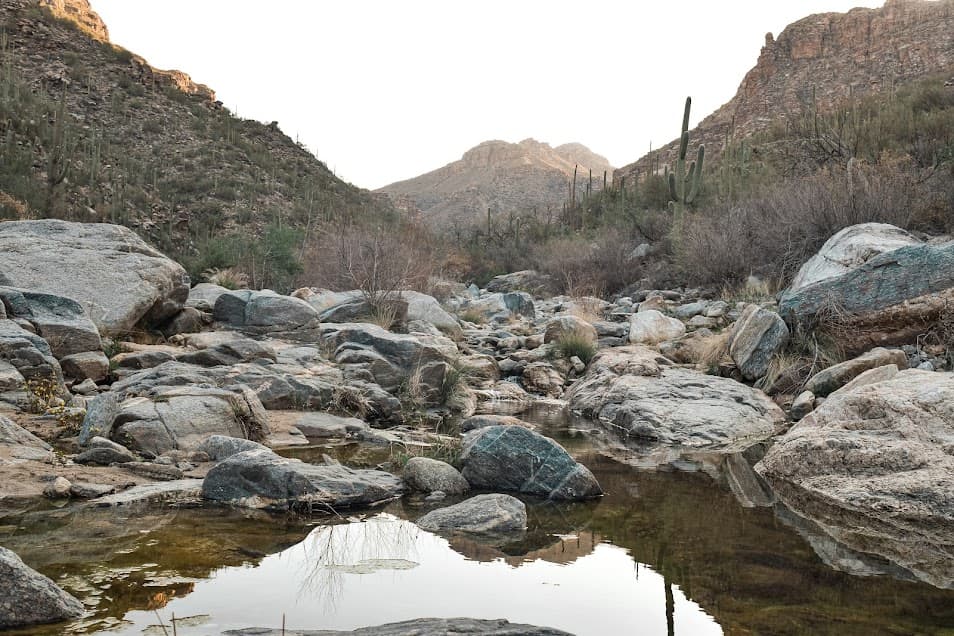
While the trail does gain elevation from the Bear Canyon trailhead, it is mostly gradual on its journey from the arid origin among the ocotillo and cholla up through the granite walls chock full of riparian tree species like willow, sycamore and cottonwood.
Getting to Seven Falls
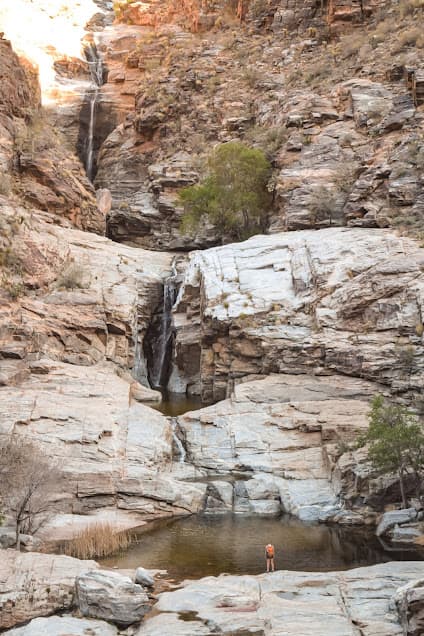
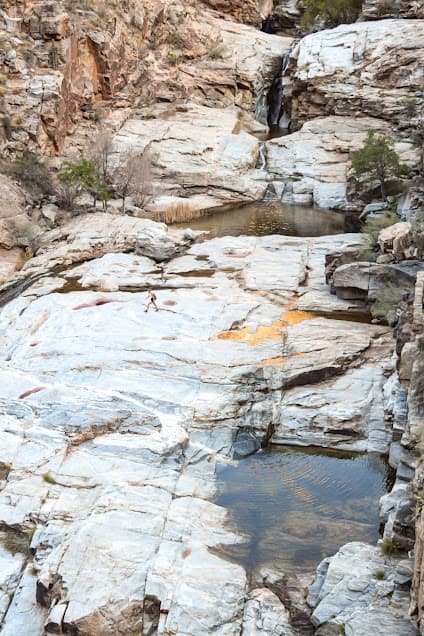
The trail winds above Bear Creek, so your first look at the Seven Falls cascade is from a higher vantage. The cascade provides swimming holes of all sizes as it sluices its way down over the rock. The colors of the rocks and glassy water change from slate to gold to tawny as the sun makes its way above the canyon. If you’re lucky, starting early will provide the benefit of some solitude at the falls. Climbing the rocks upstream along Bear Creek brings you to each of the pools cupping the runoff from the cascades. Each vantage gives new and stunning views of this steep spot in the creek.
Options for Extending the Hike from Seven Falls
Most hikers will choose to visit Seven Falls as an out-and-back day hike. However, Sabino Canyon and the surrounding Pusch Ridge wilderness are lined with many other trails through the ridges, deserts and drainages. You could piece these together into a longer loop or multi-day backpacking trip (provided you plan carefully for water availability). The US Forest Service website for Coronado National Forest details a 13.4-mile loop including Seven Falls here. For a detailed 3-D map of what the trail up Bear Canyon looks like, take a look at this website.
The hike to Seven Falls is a truly biodiversity gem and showcases a nice variety of habitats for Sonoran flora and fauna. As far as gear to bring: sun-protective clothing, snacks, water, shoes that can handle both rocks and creek crossings. Bring a bag to put extra clothes or towels in should you take a dip in the pools. It’s always a good idea to check the USFS website or Recreation.gov for hazard information, particularly flash floods and fire.
Wildlife in Sabino Canyon and the Bear Canyon Trail
Birds in Sabino Canyon
If you are new to the desert ecosystems of southern Arizona, experiencing the abundance of unique species endemic to this area for the first time is unforgettable. Birding around Tucson will offer travelers the opportunity to see “lifer” species that are uncommon outside of southern Arizona. Eight species of hummingbird are commonly found here:
- Black-chinned hummingbird
- Anna’s hummingbird
- Costa’s hummingbird
- Calliope hummingbird
- Rufous hummingbird
- Broad-tailed hummingbird
- Broad-billed hummingbird
- Violet-crowned hummingbird
E-bird checklists also note an additional three species: the Lucifer hummingbird, Rivoli’s hummingbird, and the Plain-capped starthroat. These have also been reported in the Sabino Canyon area over the years.
The diversity of woodpeckers and owls in the canyon is high, as well as vireos, wrens, kingbirds and flycatchers. Birders have also reported the long-tailed, Christmas-colored Coppery-tailed trogon here. For recent bird sightings in Sabino Canyon, check this eBird list before you go.
Reptiles in Sabino Canyon
Lizards are another common wildlife sighting along the trail to Seven Falls. The trick is getting them to hold still long enough to identify the species. Ornate tree lizards, Sonoran and Giant spotted whiptails, and the Greater Earless lizard are some of the species you may see in the area. Then there’s the jewel-toned, turquoise blue Eastern Collared lizard we all love to see. Several of the southwestern lizard species found here have notable vividly-colored patches of color on their bodies. These bright colors signal their fitness and territoriality to conspecifics. Turtles, frogs, toads and snakes also provide ample herping opportunity.
Mammals in Sabino Canyon
Mammals in Sabino Canyon include bobcat, desert cottontail, black-tailed jackrabbit, both white-tailed and mule deer, various squirrel and chipmunk species, gray fox, and black bears. You also have the chance to see not one, but three species of skunk: striped skunk, desert spotted skunk, and hooded skunk. Southwest-endemic mammals like the white-nosed coati and ringtail can be spotted, as well.
For a guided hike with a naturalist, check out the public events calendar from the Sabino Canyon Volunteer Naturalists group.