Wisconsin is home to the largest breeding population of sandhill cranes in their Eastern range, as well as a breeding population of reintroduced migratory whooping cranes. Although both species vacate the wintry landscape of the Badger state in favor of their wintering habitats in Indiana and the southeastern US, the familiar bugles, whistles and purrs return to Wisconsin’s skies in March. The cranes’ return heralds spring in Wisconsin.
Sandhill Cranes in Wisconsin
An estimated 55,000 – 60,000 sandhill cranes either breed in or migrate through Wisconsin each spring, nesting in wetlands where the breeding pairs will raise one to three downy red colts to adulthood. Sandhill cranes are a long-lived species; science knows of cranes over the age of thirty. They don’t start to breed until they are between the age of two and seven, so a substantial population of nonbreeding birds also makes their summer home in the marshes of Wisconsin.
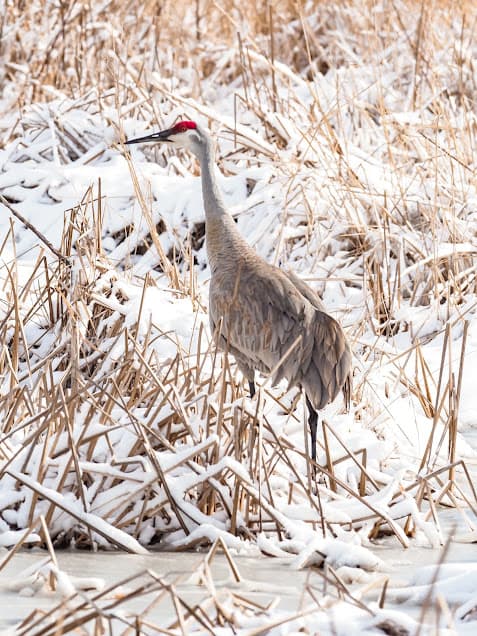
Notes On Sandhill Crane Color, Behavior and Vocalizations
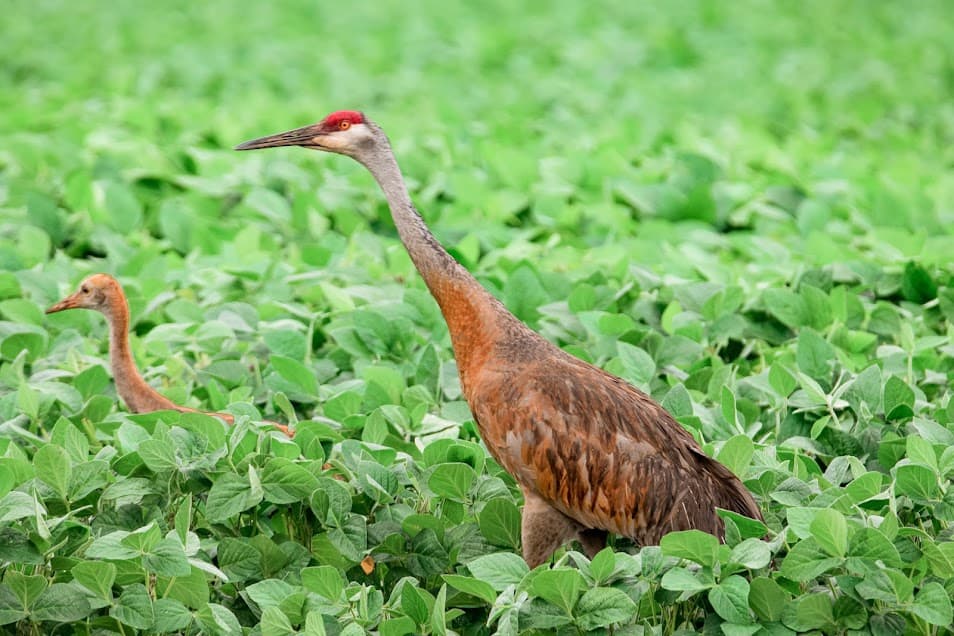
Breeding cranes appear rusty red, which is not the natural pigment their feathers produce. Instead, it is the result of preening over their silvery gray plumage with mud rich in iron oxide. Some birds can appear strikingly reddish brown.
The breeding display behaviors of sandhill cranes include jumping, flapping, and throwing objects in the air. Many bird species of all sizes have intricate breeding displays, but there is something unique about these tall birds that could look you in the eye, leaping and throwing their heads back out in open fields where we get the chance to observe them.
We could have a tournament bracket for the most iconic sound of spring in the marsh (red-winged blackbird? Canada goose? Sandhill crane?), but cranes would come out near the top by anyone’s measure.
A great paper (Vocalizations of Sandhill Cranes, Nesbitt and Bradley 1997) was published in the Proceedings of the North American Crane Workshop in 1997. The paper goes into detail on the various crane vocalizations, including the unison call in which the male and female crane (and sometimes juvenile offspring) vocalize together to project territoriality, engagement with another family group, and support breeding biology.
The Nesbitt and Bradley paper references a 1988 study (Tacha 1988) which found that increased frequency of unison calling was correlated with increased blood hormone and gonad size in sandhills. The difference in frequency between male and female cranes is what makes the unison call effective. The higher-pitched female call is conducive for more precise location of the pair, while the lower-pitched male call projects over a larger area.
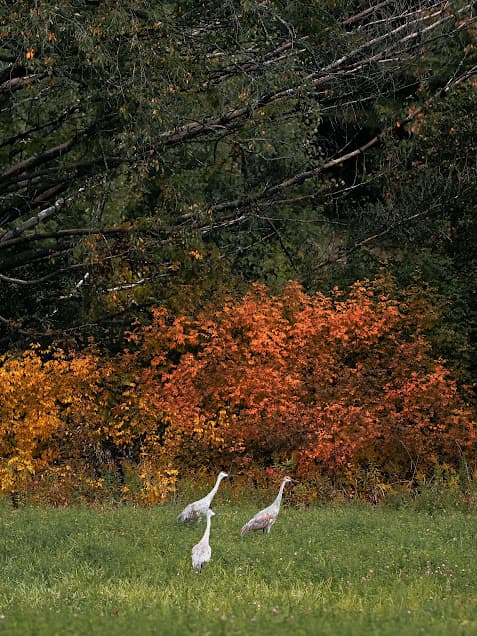
Whooping Cranes in Wisconsin
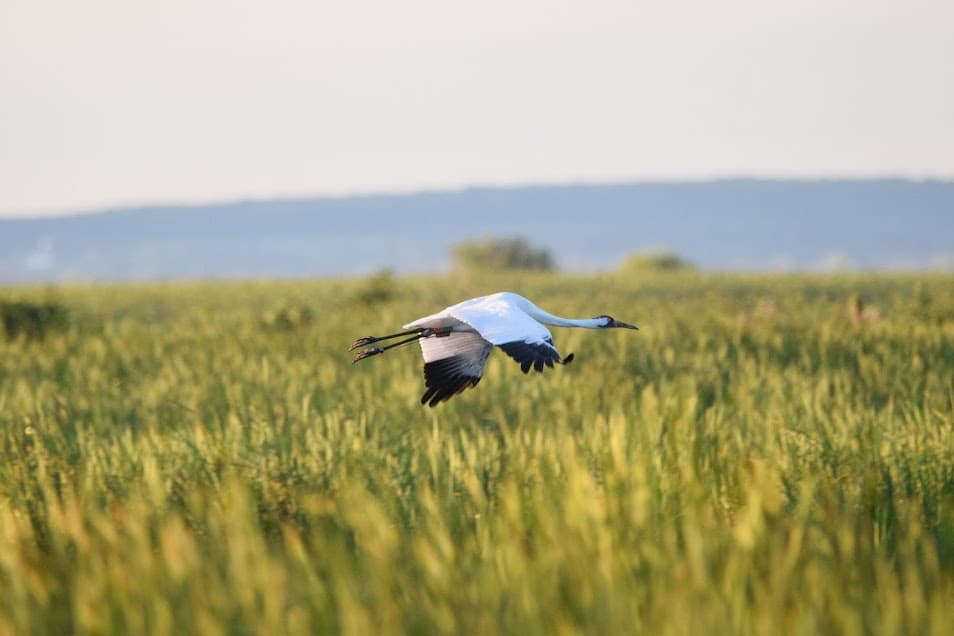
In addition to the sandhill cranes that descend on the springtime marshes of Wisconsin, a small breeding population of whooping cranes also nests in the state. As of February 2026, the Eastern migratory population of whoopers had 64 individuals according to the International Crane Foundation.
Biologists closely monitor the whooping crane breeding populations in Wisconsin since they are a highly endangered species. If you lay eyes on a whooping crane, look for colored leg bands that identify each individual.
Successfully rearing a chick to fledge and survive the migration is a noteworthy accomplishment for wild whooping crane parents. According to this US Fish and Wildlife Service report from 2023-2024, out of 22 nests that year only one wild chick fledged and migrated. Biologists from the International Crane Foundation rear whooping crane chicks in captivity and release them back into the migratory population.
Where to See Cranes in Wisconsin
Horicon Marsh
The iconic Horicon Marsh is a well-known birding hotspot within the state. The U.S. Fish and Wildlife Service manages the northern half of Horicon Marsh as a wildlife refuge. Similarly, the Wisconsin DNR manages the Horicon State Wildlife Area on the southern half of the marsh. The Auto Tour on the refuge side just outside of Waupun opens March 15. From there, some great hiking trails and a boardwalk accessible from the road. Horicon is known to have both species of cranes nesting here.
White River Marsh near Berlin, Wisconsin
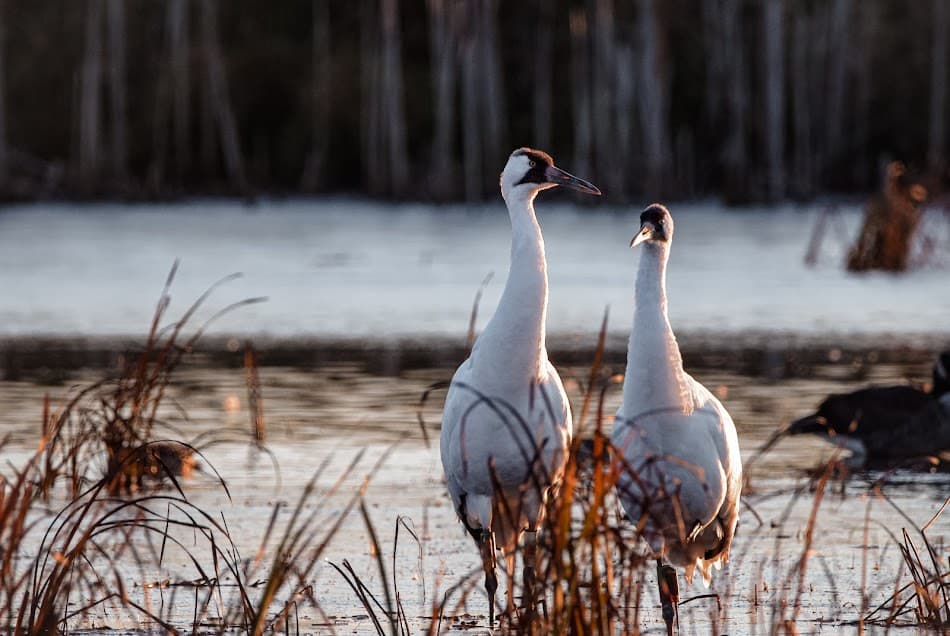
One year while turkey hunting at White River Marsh, the wrong large bird species came strutting up to my decoy. It was a pair of perturbed sandhill cranes. They did not appreciate the plastic interloper in their territory and spent 30 minutes trumpeting at it and hopping around. While no turkeys were killed that day, I got a close-range show of crane territorial behavior. I have seen both whooping cranes and sandhill cranes at this central Wisconsin wildlife area.
Farm fields in Central Wisconsin
Drive up I-94 and you just might experience the feeling of being stared down by a giant sandhill crane with eyeballs larger than your hubcaps. “PROTECT YOUR SEED,” the billboard proclaims, despite the pterodactyl-like angry bird in the background. The product advertised here, Avipel, is a product farmers can use to treat seed corn. It is designed to prevent complete destruction by the flocks of sandhill cranes that seek it out just after planting. Cranes can do some serious damage to untreated seed corn, and fields throughout the state are common places to observe cranes, both whoopers and sandhills. While cranes love seed corn, they also forage on waste grain and insects found on the agricultural landscape.
Meadow Valley/Necedah National Wildlife Refuge
At the south end of the massive chunk of marsh and forest habitat that make up the Central Forest region of Wisconsin lies Necedah National Wildlife Refuge. A release location for reintroduced whoopers, the cranes actively nest and forage on the refuge. You can even buy plush whooping cranes for your favorite two-year-old at the refuge gift shop. The sedge marsh habitat throughout the refuge lies on peat found to be 11,000 years old and provides excellent habitat for cranes and a myriad of other wetland species.