
Some of the most beautiful alpine lakes in Colorado are not the easiest to get to. This is what makes them special: to experience the lake, you have to earn it. By nature, limited traffic preserves their natural beauty. The trail to Tuhare Lakes in the Holy Cross Wilderness is one of the best alpine lake hikes in Colorado!
The Tuhare Lakes are way up there, perched up at 12,400 feet. There is an upper and a lower Tuhare Lake, complete with waterfalls and wildflowers in the summer. These lakes are fed by snowmelt, and provide the headwaters for Fall Creek, one of the most prominent streams in the area.
The hike to Tuhare Lakes is a 10.5-mile out-and-back with 2,500 feet of gain that is generally considered challenging.
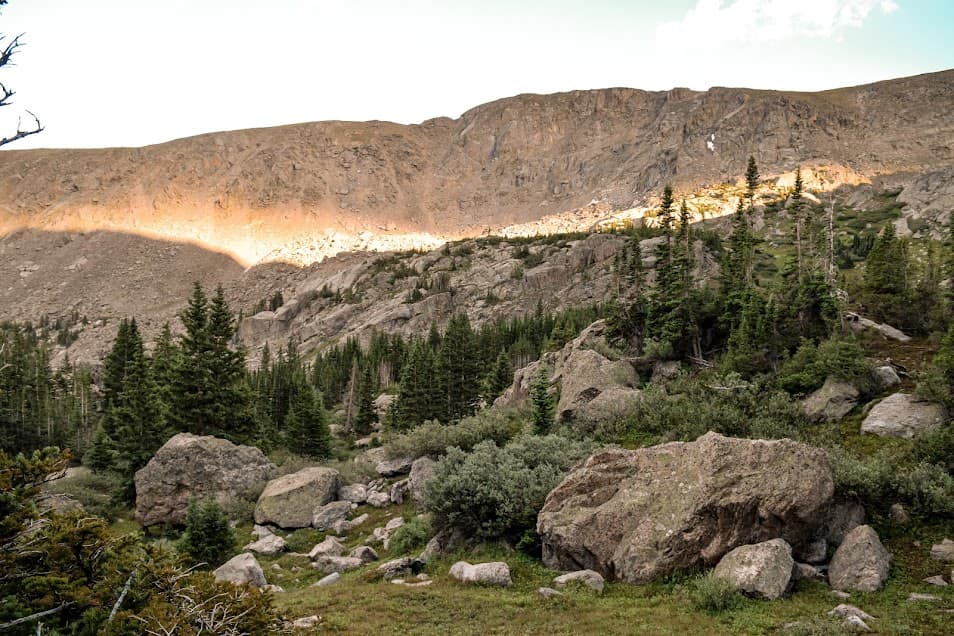
Alpine Lake Hike in Colorado: Hiking to Tuhare Lakes
The Tuhare Lakes are nestled in the Holy Cross Wilderness, a 123,000-acre area inside of White River National Forest. Both the upper and lower lake are accessed from a spur off the Fall Creek Trail.
Getting to Half Moon Trailhead
From I-70, the Half Moon Trailhead is a 47-minute drive to the south. This hike is within a 3-hour drive from Denver, and just over an hour from Leadville. To get to Half Moon Trailhead, take the route 24 exit toward Minturn from I-70. Head south on Route 24 for 5 miles until you reach Tigiwon Road. Tigiwon Road is a dirt road, and a high-clearance vehicle would be helpful but not necessarily required. Head up Tigiwon Road (lots of switchbacks) for 8 miles until it terminates at the Half Moon Trailhead.
Click here for a Google maps link to Half Moon Trailhead.
Half Moon Trailhead to Fall Creek Trail
The Fall Creek Trail follows somewhat of a bench up above Fall Creek for the first part of the hike. As it curves along the bench through spruce, you get great views of the drainage below. For wildlife, snowshoe hare and mule deer are common.
Lake Constantine
Around the four-mile mark, the trail flattens out into a broad wetland area with mountain views. Lake Constantine lies along the left side of the trail, boulders ringing her shores. The Fall Creek drainage has some good Colorado trout fishing, so bring gear! The hike to Lake Constantine could be an 8-mile out-and-back hike and will save quite a bit of time if you decide not to hike all the way to Tuhare Lakes.
Spur Trail to Tuhare Lakes
A half-mile after Lake Constantine, the trail splits. The left split will continue on Fall Creek Trail, but the right spur is the trail that heads up to the alpine lakes. It can be easy to miss, so continue bearing right after Lake Constantine.
From the spur, the trail gets a little bit technical. You will have to haul yourself up over steep rocks on a small section of the trail, but it’s nothing too crazy.
Channeling your inner mountain goat is soon rewarded, though, when the trail pops up into a wide flat surrounded by mountains, with Fall Creek running through the middle. This is a great spot to camp below treeline if you decide to make the Tuhare Lakes hike into an overnighter. Keep in mind you’re at nearly 12,000 feet here so use caution if prone to altitude sickness.
Black bears live in the Holy Cross wilderness, so secure food and scented items when camping in the mountains.
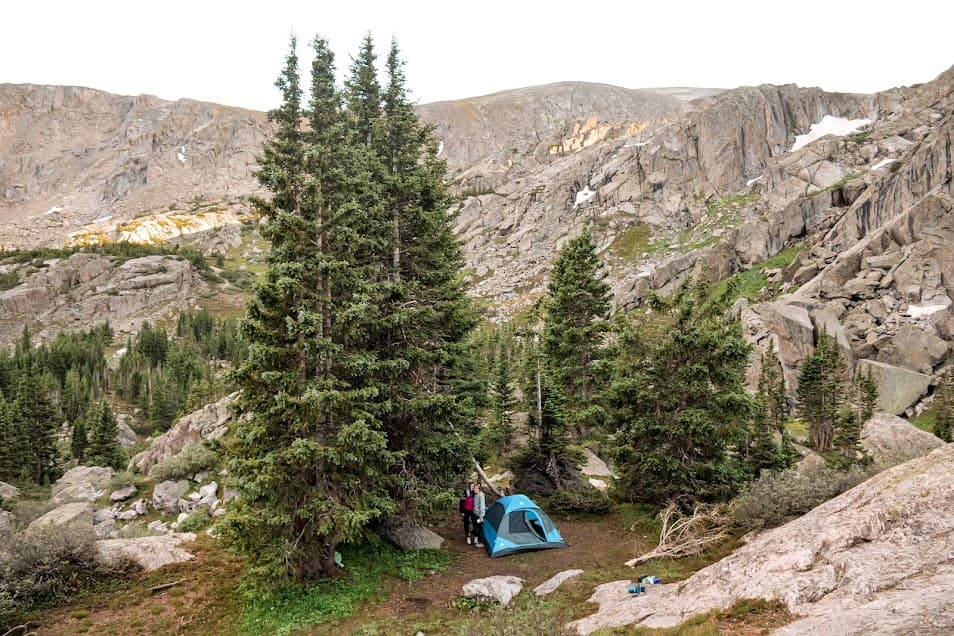
Lower Tuhare Falls and Lower Tuhare Lake
Catch your breath, because there is another big climb ahead. The trail ascends a rocky drainage above Fall Creek with views of Lower Tuhare Falls tumbling over rocks down below.
Lower Tuhare Lake is the more accessible but smaller of the two lakes. At just over 300 yards long, Lower Tuhare Lake is an amazing alpine lake/wildflower hike combo. You also have a pretty good chance at solitude. When we camped and hiked here in the middle of summer, we had the whole basin to ourselves for two days.
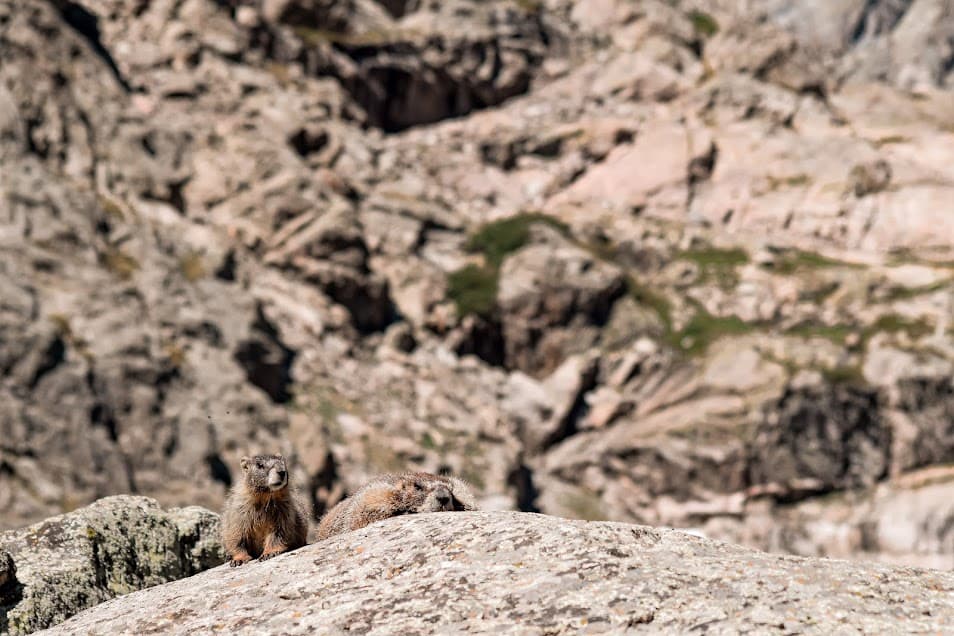
Yellow-bellied marmots frequent the rocks around Lower Tuhare Lake. These amazing alpine animals hibernate for 6-8 months out of the year! They have a lot of beefing up to do over the summer while they layer on fat storage.
The runoff from the upper Tuhare Lake pours down over rocks into the Lower lake, and there are great swimming and diving rocks at the head of the lake. We also saw trout in the blue-green water.
Upper Tuhare Lake
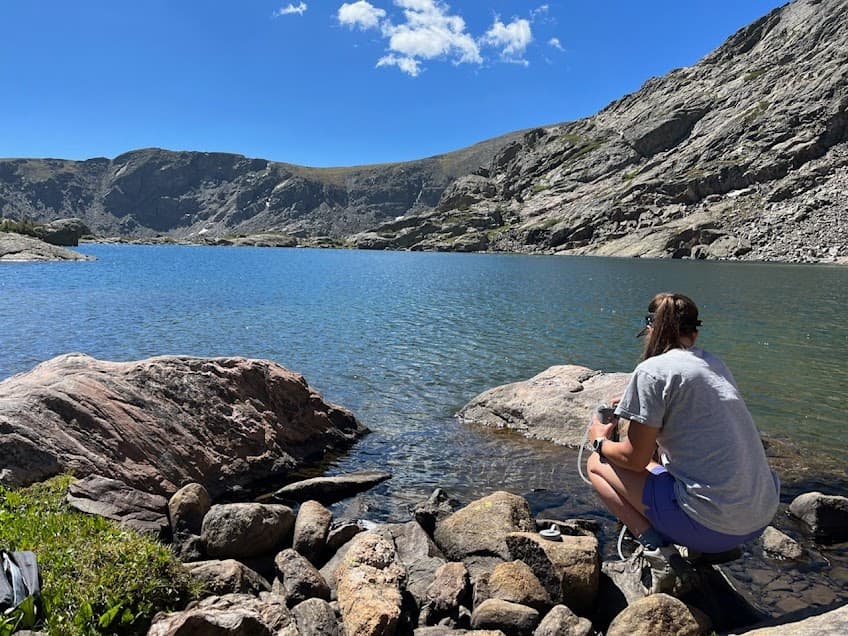
Most hikers end their trip at the Lower Tuhare Lake. I wanted to head up to see the upper lake, to which there is not really an official trail. It is mostly a scramble over rock to get up the next 250 feet in gain to the upper lake. The higher of the Tuhare Lakes is 650 yards long and is the big basin that collects snowmelt from the surrounding ridgeline. The ridgeline to the north is traversed by the Halo Ridge Trail.
Upper Tuhare Lake is pretty, but the better of the two for hanging out and swimming would be the Lower Tuhare Lake.
Safety in the Mountains
The main safety concerns on the hike to Tuhare Lakes are not unique to this trail when we’re dealing with the Rocky Mountains. Things to keep in mind:
- Sun exposure, especially swimming at well over 12,000 feet, can cause sunburn extra fast.
- Driving and then hiking up to altitude quickly can trigger altitude sickness symptoms. Stay hydrated and have a backup plan!
- The Tuhare Lakes are alpine lakes above treeline. Storms can quickly blow in over the ridges, especially during the early afternoon. Have a plan to take shelter.
Overnight Backpacking at Tuhare Lakes in Colorado
There are lots of great options for backpacking in the Holy Cross Wilderness. You can camp below the Tuhare Lakes as long as your campsite is more than 100 feet from lakes or streams. Make this into a multi-day hike by linking up with the Fancy Lakes/Missouri Lakes loop! Detailed backpacking guide can be found here.
Pingback: Hiking Colorado's High Country: Missouri/Fancy Lakes Loop Trail - the lupine
Pingback: Backpacking the Holy Cross Wilderness, Colorado - the lupine
Pingback: Paint Mines Colorado Guide: Prismatic Hoodoos on the Prairie - the lupine