
So, the slob buck you only get on camera at night is bedding in the marsh. The marsh that has exactly zero trees large enough to haul your Oreo-loving self up into. The marsh that offers what might be the only opportunity at getting close to said buck in the daylight. We all love to bowhunt whitetails from trees for many reasons, but getting an ambush from above is just not always possible. Born to be a cougar, forced to be a… muskrat? A deadly muskrat for sure.
Hunting deer from the ground is what you make of it. Compared with an arboreal vantage point, there is not much to look at. You can’t help but sit there and think of all the deer that are probably moving around the marsh right now that you can’t see from the foxhole you created in the cattails.
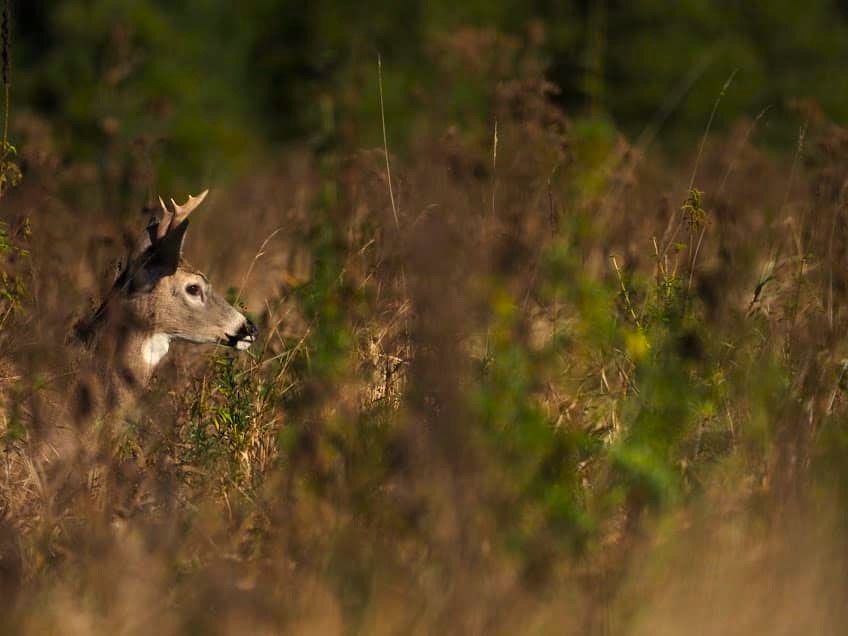
But the experience of hearing deer cough, snore, and take careful footsteps just feet away while you go undetected is pretty special. Every rustle in the brush or soft buck grunt you hear immediately becomes that target buck in your mind, sending your heart racing.
The perception that deer are all over the place out there in the marsh, just doing their thing, is very real. In sedge and cattail marshes, there are usually lots of little trails and travel corridors that deer take to move through a habitat where humans normally don’t bother them much. You will likely hear more deer than you will ever see. But the encounters are memorable and will teach you a lot for when it’s time to get back up in a tree.
Here are some of the things to keep in mind when you are strategizing your setup to bowhunt whitetails from the ground.
Pick a good spot.
This is where some observation sits from a nearby tree can really come in handy if you’re able to get eyes on where the deer are moving through the marsh.
On the ground, every trail looks beaten down and awesome, so it can be overwhelming trying to choose the right one. Browse, travel corridors, and transitions can all be good options, but some of the finer points of picking a specific trail can come down to luck.
Pick somewhere with a backdrop.
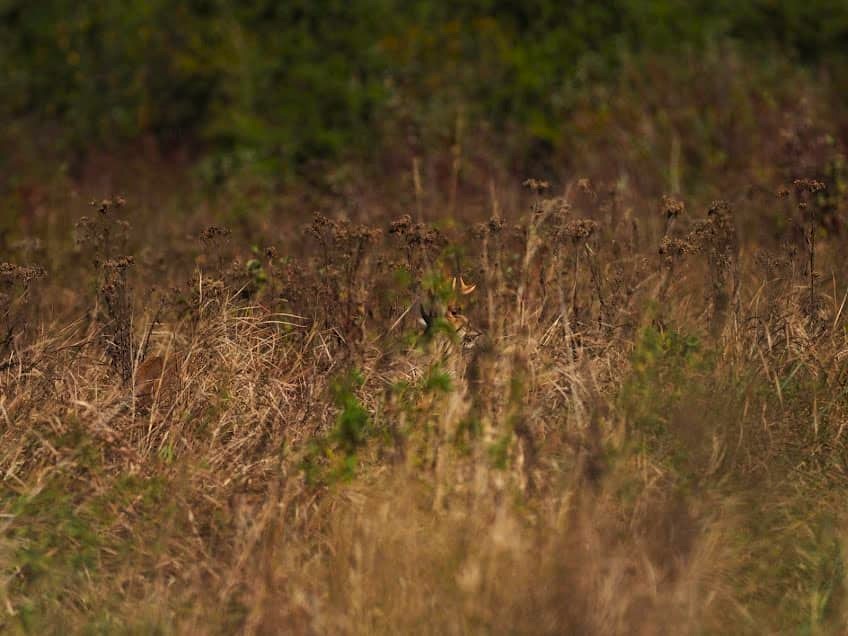
You probably need more of a backdrop than you think you do. Once you have chosen a trail or trails to set up on, being able to tuck in somewhere undetected is absolutely critical. This means a tangled willow shrub, a rotting tree, et cetera.
Brush in.
In addition to a hefty backdrop, having some cover in front of you to break up your outline is a must. This can be tricky because you don’t want anything that’s going to screw up your shot. Practice drawing and turning to shoot all potential angles so that the cover doesn’t mess up your shot. This includes having your bow drawn and not drawn. It’s easy to forget about moving around with the arrow sticking way out in front of the undrawn bow and how much stuff it can knock into and get caught in.
Get low.
No, lower. If you think you’re “pretty low to the ground”, you are not low enough. This might mean actually sitting on the ground. You could have a foam pad to kneel on and sit on your heels, too. I have used a 12-inch high three-legged stool that fits in my pack, but the second I hear a deer coming I am off of that thing and kneeling low to the ground. The cost of not being low enough is getting repeatedly busted by does.
Practice shooting from a kneeling position.
Because this is the most likely position you’ll be in for the shot.
Use a lighted nock.
The shot you take will most likely be at a close range, giving you very limited time to be able to watch the deer and see where it goes. Using a lighted nock can give you that extra information about shot placement in the instant you have to watch the deer before it takes off into the cover.
Cover your face.
In addition to a face covering like a gaiter or mask, often holding your bow cam in front of your face to break it up can help to calm a suspicious deer.
Don’t necessarily be afraid of movement.
Some soft grunts and grass rustling as you move on the ground can bring in curious bucks. This sounds a lot more realistic than you hammering a couple last-ditch grunts from 60 yards away up in a tree. As you hear the deer approach, getting your body into shooting position can usually sound pretty natural to them within reason.
Be mentally strong.
To be able to successfully bowhunt whitetails from the ground, it takes a different kind of mental fortitude. All-day sits during the rut can be challenging, but the tough part about ground hunting is related to the fact that you can’t see much. You can often hear deer, and it’s a struggle for your brain to listen to deer sounds and not be able to see them like you can from a tree. The mental game here is huge! So is the adrenaline rush when you find success.
Keep scent in mind.
Can you get away with hunting the same ground repeatedly? It doesn’t take long sitting in a little homemade nest of wet cattails to lay down a ton of scent. For me, the jury is out on this one; I have hunted the same spot on the ground repeatedly over the course of the season and seen deer every time. But did all that scent spook the older, wiser deer into avoiding the area? Maybe. Do what you think is right.
Enjoy your venison!
Try this baked ravioli recipe but with venison instead of antelope.
These are a few of the tips I have learned over time when it comes to trying to bowhunt whitetails from the ground. Hunting from the ground is so different than being up in a tree, and you will experience deer in an up-close-and-personal way that is completely new to most hunters who have never hunted from the ground.
Pingback: 10 Helpful Ways to Use OnX Maps - the lupine
Pingback: Hot Turkey Hunting Tips You Probably Already Know - the lupine
Pingback: The Best Spots to See Cranes in Wisconsin - the lupine