
Much of the stunning scenery in central Oregon is the result of volcanic activity in the Cascade range, some of it relatively recent. The snow-capped dramatic peaks of Mt. Hood and the Three Sisters get all the attention when we think of Oregon’s volcanoes. But the underground lava tubes in central Oregon gave way to caves (important bat habitat!) and the Tamolitch Blue Pool.
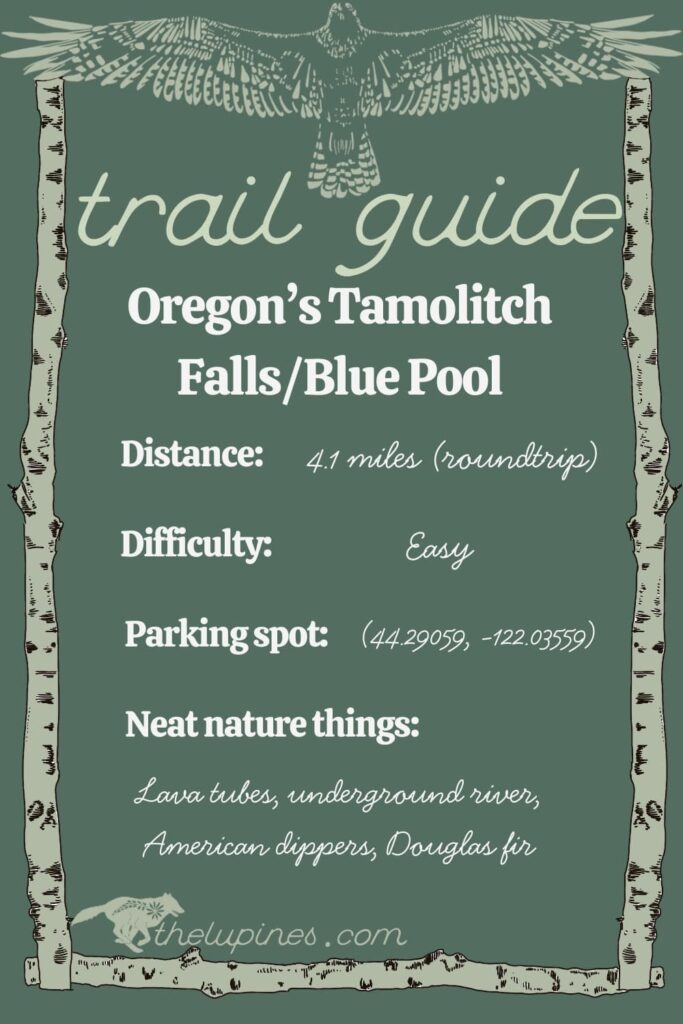
The Tamolitch Blue Pool is one of the most famous spots in central Oregon because of its incredible turquoise blue color. Getting to it is an easy 4.2-mile roundtrip hike along the shaded McKenzie River. This gem-colored pool tucked down in the firs is one of central Oregon’s must-see natural wonders!
Hiking to Tamolitch Blue Pool via the McKenzie River Trail
Trailhead and Parking
The trailhead for the hike to the Tamolitch Blue Pool is easily accessible off Highway 126. Since this is a super popular trail, the parking area can get crowded. Try one of the Top Secret People Avoiding Hacks: Get there early, on a week day, or during an off-season (AKA, not summer). There is an outhouse at the trailhead.
Hiking along the McKenzie River
The trail to the Blue Pool follows the McKenzie River, and is actually a section of the 26-mile McKenzie River Trail. The trail gradually climbs in elevation and is, for the most part, an easy hike. The river is shaded here by Douglas fir and white alder. The bigger trees provide shade and nutrients to the McKenzie river through the leaf litter they produce in the fall. Big trees also provide erosion control and wood for fish habitat in the river.
As the trail climbs up toward the Blue Pool, there are some steeper cliffs with views of the McKenzie River.
Arriving at Tamolitch Blue Pool
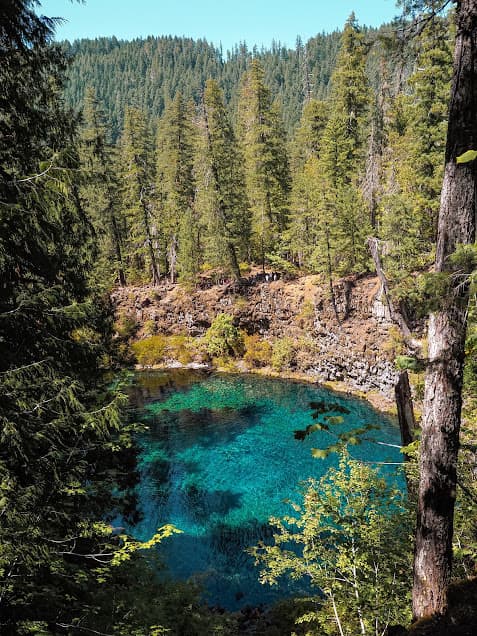
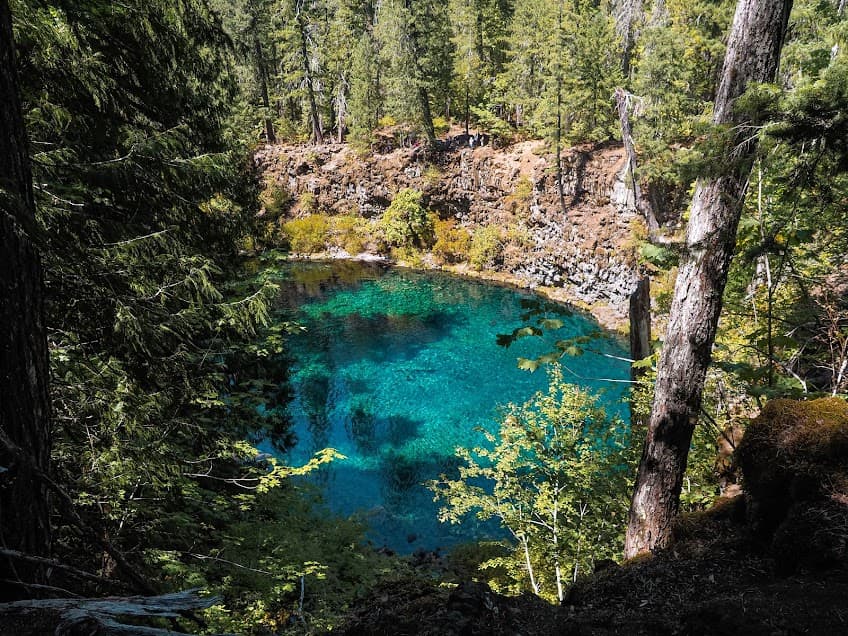
Around the 2-mile mark, the trail leads to the famous Blue Pool. The turquoise-blue pool is tucked down among 60-foot cliffs. In 1933, an engineer for the Willamette National Forest named the pool “Tamolitch” after a Chinook word for “bucket”. With the vertical cliffs that cup the pool, “bucket” is a pretty accurate description.
Cliff jumping and swimming at Tamolitch Blue Pool?
With 60-foot vertical rock walls ringing the pool, cliff jumping is absolutely tempting. Keep in mind that people have tragically died here attempting to cliff dive. Not only are there dangerous rocks in the water below, but the water is extremely cold at 37 degrees year-round.
That being said, the day we hiked to the Blue Pool we did watch a guy send it from the very top of the cliff off the trail. He sat on the edge of the cliff for a good 10 minutes pondering his life decision and then gave’r. He emerged from the frigid water shivering but uninjured.
If the 60-foot dive from the top isn’t for you, there are some rocks ringing the pool that aren’t quite as high. The main risk when it comes to swimming and diving here is actually the extremely cold water. The water temperature alone is quite literally breathtaking.
Getting to the Water’s Edge
To get down to the edge of the water, you will have to follow the rim of the pool all the way around to the south side and hike down. There is not an official trail over here, but there is flagging and it is easy to see which routes people use to get down to the water.
If cliff jumping isn’t your thing, you can easily push off the rocks here and into the pool to take a dip. Keep in mind the risks, however–the cold temperature is just as frigid whether you enter from ankle-depth or plunge from 60 feet.
An out-and-back Hike
The day hike via the McKenzie River Trail is an easy out-and-back. The total hike is 4 miles roundtrip.
Trail Map from AllTrails
Where Did the Tamolitch Pool Get its Color?
The Blue Pool is famous because the water has a jewel-toned blue color that you don’t often see in nature. A three-mile section of the McKenzie River was covered by a lava flow just 1600 years ago. Here, the river flows underground and re-emerges at Tamolitch.
When water flow rates are high, a waterfall feeds the Blue Pool. But for most of the year, the 30-foot deep pool is fed from underground seeps. The river has been extensively filtered through the porous volcanic rock and is free of most particulate matter when it emerges in the Blue Pool.
This also gives the pool the illusion that it is much more shallow than its 30-foot depth. You can see all the way to the bottom! Thanks, Lava Tubes!!
The weather conditions will affect the color of the Blue Pool. Sunny days are better for seeing the famous turquoise tone of Tamolitch.
The Best Season to Visit Tamolitch Blue Pool
Summer and spring is certainly the most popular time of year to visit the famous Blue Pool. For the cold-plunge divas, 37 degrees is a little more tolerable this time of year. However, the fall color change gives the pool a whole new level of beauty with yellow and orange trees contrasting with the blue water. For your best chance at solitude in this popular spot, try it in the winter.
More To See Near the Blue Pool
The Willamette National Forest in central Oregon is full of amazing outdoor recreation opportunities.
The Tamolitch Blue Pool and Koosah/Sahalie Falls Hike
To extend your hike, the Koosah and Sahalie Falls are also accessible from the McKenzie River Trail. Starting from the Mackenzie River Trailhead: Tamolitch Falls/Blue Pool, continue past the Blue Pool north toward Koosah and Sahalie Falls. Koosah Falls comes first; follow the trail up and across the river and back down to Sahalie Falls. Doing this as an out-and-back is a 13-mile hike.
Camping and Food
Camping in the area:
- Ice Cap Campground, 21 campsites – 9 are tent-only
- Paradise Campground, “Tropical vibe”, stocked trout for fishing
The McKenzie River General Store just west of the Tamolitch Falls/Blue Pool trailhead is a gem. Fresh food, drinks and a little shop with gifts, it is truly a vibe.
More Western US Hiking and Backpacking
- For another amazing Pacific Northwest hike, check out the redwoods at the Boy Scout Tree Trail in northern California.
- For one of the best waterfall hikes in Montana, hike the Holland Falls Trail.
- Plan a backpacking route in the Holy Cross Wilderness in Colorado.
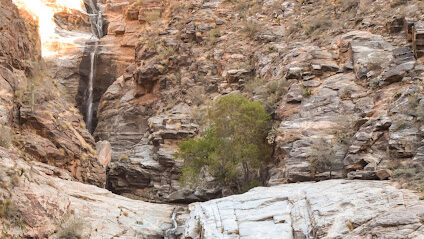
- For the best southwest hikes, head to Grand Canyon National Park or the Seven Falls Trail, one of the best hikes in Tucson.
- Summit one of the tallest mountains in Colorado, Mount Massive.
Pingback: Hiking the Boy Scout Tree Trail in California - the lupine
Pingback: How to Save Money on Backpacking Gear: Spend vs. Save - the lupine
Pingback: Hiking to Seven Falls in Tucson, Arizona - the lupine